

Sizing Check
The installer confirms tank size using First Hour Rating and your household hot water use.
When a tank is leaking, rusting or simply worn out, a replacement done to code protects your home and your hot water supply. Request an estimate and we connect you with a licensed local installer in our network.
A written replacement estimate from an installer in our network should list each of these items, so you can compare scope before you approve any work.
The installer confirms tank size using First Hour Rating and your household hot water use.
Gas, water and power are shut off safely, and the old tank is drained and disconnected.
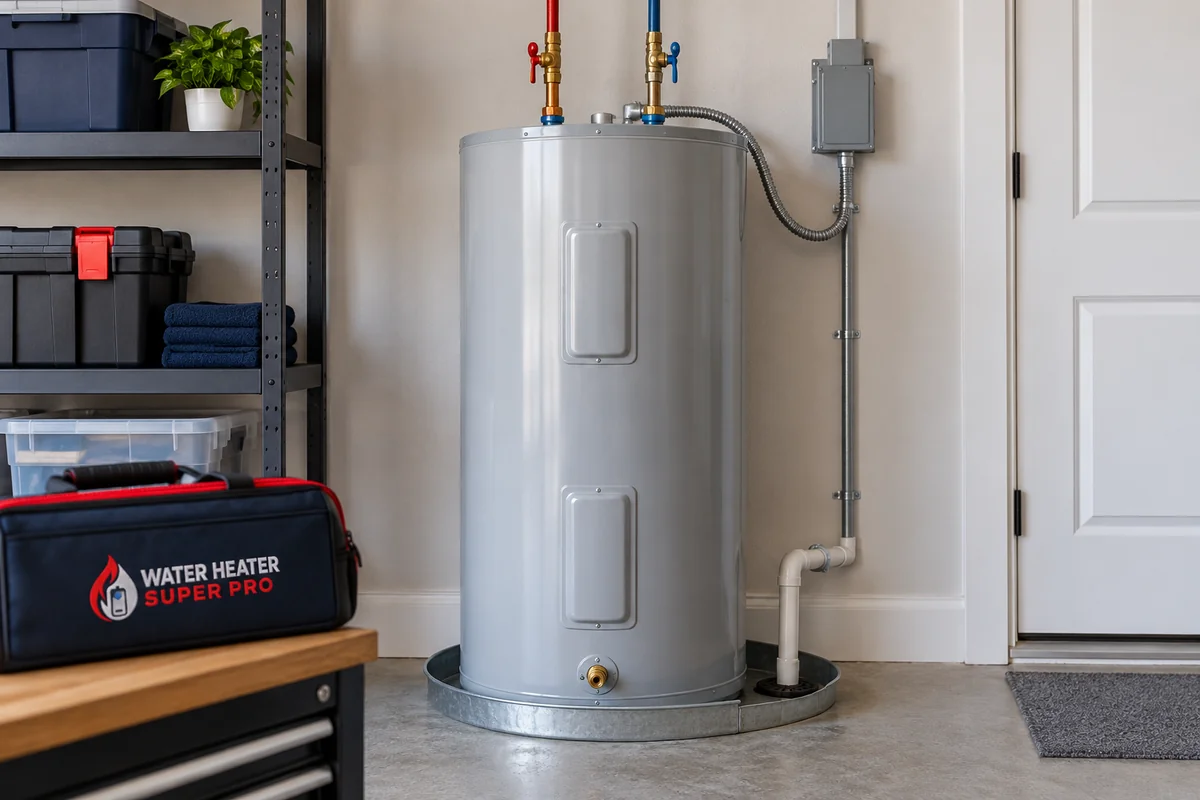
The new heater is set level, on a drain pan where needed, with fresh supply connectors.
A new T&P relief valve and a proper discharge line are fitted to meet current code.
The installer checks for a closed system and adds an expansion tank if code requires one.
The estimate states who pulls the permit and whether removal of the old unit is included.
Most homes replace a tank with the same type of unit, and some owners use the swap to move to a tankless or heat pump model.
Homes with natural gas service and a working vent
Homes with electric service and a 240-volt circuit
Owners ready to upgrade efficiency at replacement
Every replacement estimate depends on the home, so the installer looks at these factors before writing a price for you.
| Factor | Why it changes the estimate |
|---|---|
| Fuel Type | Gas units need vent and combustion air checks, and electric units need a 240-volt circuit. |
| Tank Size and FHR | A larger tank or higher First Hour Rating means a bigger unit and sometimes new fittings. |
| Unit Location | Attic, closet or tight crawlspace installs take more labor and often need a drain pan. |
| Code Updates | An older install may need a new T&P discharge line, an expansion tank or vent corrections. |
| Permit Requirements | Your local building inspections office sets the permit and inspection steps for the job. |
Use this form to share your ZIP code, unit type and what the old unit is doing.
We connect you with an independent licensed installer who covers your ZIP code.
The installer checks your setup and gives you a written, itemized replacement estimate.
Compare the scope and approve the work only if it fits. There is no obligation to hire.
One form starts one water heater replacement request: a single matched installer, an itemized written estimate and no cost to compare it with other quotes.
Your request goes to an installer who handles water heater replacement in your area.
Installers in our network are independent contractors licensed by the state board.
Each estimate lists the unit or parts, labor and permit items so you can compare clearly.
Requests go to installers who cover your ZIP code, and you never have to hire anyone.
Key facts from this page, one line each.
Water heater replacement makes sense when the tank itself is leaking, the hot water is rusty, or the unit is near the end of its rated service life. Repair makes sense when a single part has failed on a younger tank, such as a thermocouple, heating element, thermostat, drain valve or T&P relief valve.
If a repair is likely to be followed by another failure soon, putting that money toward a new unit is often the better decision. Ask the installer to explain both options.
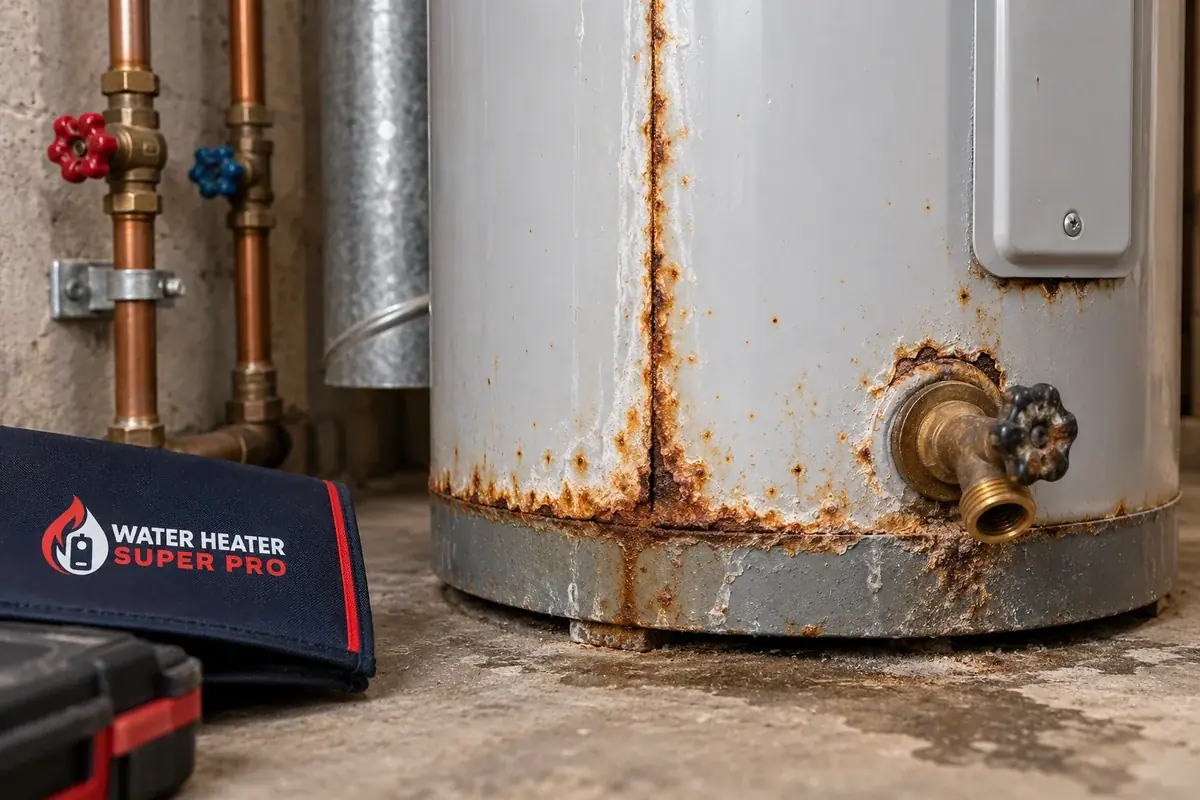
A tank body leak means the steel lining has corroded through, usually after the anode rod is depleted, and no repair fixes that. Water seeping from the base or seams calls for water heater replacement, and the cold water supply should stay closed until the new unit is set.
The rating plate serial number encodes the manufacture date of the water heater, and the format varies by brand. Many manufacturers rate tank water heaters for roughly 8 to 12 years. Our water heater lifespan guide explains how age and warning signs combine in the replace-or-repair decision.
| What you see | Leans toward | Why |
|---|---|---|
| Water leaking from the tank body or seams | Replace | A corroded tank cannot be repaired |
| Rusty or discolored hot water only | Replace or inspect | Can mean tank corrosion or a depleted anode rod |
| Unit near or past 8 to 12 years with repeated problems | Replace | More failures are likely |
| Pilot will not stay lit on a younger gas tank | Repair | Often a thermocouple or gas control issue |
| Lukewarm water on a younger electric tank | Repair | Often an element or thermostat |
| Leak at a fitting, drain valve or T&P valve | Repair | The part can usually be replaced |
A complete water heater replacement includes draining and disconnecting the old unit, setting the new one, connecting water, gas or electrical supply, installing a T&P relief valve with a proper discharge line, adding thermal expansion control where required, checking venting, testing for leaks, and hauling away the old water heater.
Code requirements are the part homeowners most often cannot see. Gas units need correct venting and enough combustion air. Electric tank and heat pump units usually need a dedicated 240-volt circuit. A drain pan is used where a leak could damage the building, such as in an attic or on an upper floor.
Removal of the old tank is normally part of the job; the old water heater removal page explains what that step involves.
Use this list as a checklist when you compare written estimates, and ask the installer about any item that is missing rather than assuming it is included.
A water heater replacement estimate should list the exact make, model and capacity, the First Hour Rating or GPM rating, the UEF, every code item included, whether the permit is included, removal and disposal of the old unit, and any extra work such as venting, gas line or electrical changes.
Comparing estimates is easier when each one lists the same items. If one estimate is much shorter than another, ask what is missing rather than assuming the work is identical. For a broader look at pricing factors, see the water heater replacement cost page.
When two estimates differ, line them up against these eight items. Gaps usually explain the difference better than the total does, and the installer can fill them in before you decide.
Water heater replacement typically requires a permit from the local building inspections office, which also performs the inspection. Each jurisdiction sets its own rules, so permit needs depend on where you live and on the scope of the job. Licensed installers typically pull the permit and schedule the inspection for the homeowner.
The water heater replacement inspection checks the items that protect the home: venting and combustion air on gas units, gas connections, the T&P discharge line, thermal expansion control and the electrical supply. Passing inspection confirms the new unit meets the code your jurisdiction applies today, not the code in force when the old tank went in.
Permit questions belong in the estimate conversation before you approve the work. Ask whether the permit fee is included, who schedules the inspection, and what happens if an item fails. Our guide on how to choose a water heater installer lists more questions worth asking.
Water heater replacement time depends mainly on the scope of the job. A like-for-like swap of a tank in an accessible location is usually the simplest job, while changing fuel type, moving to tankless, upgrading venting, adding a 240-volt circuit or working in an attic adds time and may need extra trades.
Scheduling also depends on installer availability in your area and on whether the chosen unit is in stock locally. The installer will confirm timing when you review the estimate.
Mention any of these factors in the estimate form so the installer can plan the visit and confirm a realistic timeline when you review the estimate.
Water heater replacement type is chosen by the fuel available at the home, household hot water demand, space and efficiency. Tank units are sized by First Hour Rating, tankless units by GPM at a temperature rise, and the UEF on the EnergyGuide label compares efficiency between models of the same type.
Gas homes can replace a gas tank with another gas tank or move to gas tankless. Tankless conversion often needs a larger gas line, new venting and a condensate drain on condensing models. Our tank vs tankless guide compares hot water delivery, space and upkeep for the two approaches.
All-electric homes can choose an electric tank or a heat pump water heater, and both usually need a dedicated 240-volt circuit. Heat pump units also need enough surrounding air and a condensate drain. Electric utility rebate programs change, so check current offers with your utility before choosing a model.
The federal Section 25C credit applied, per the IRS, to qualifying property placed in service on or after January 1, 2023 and before December 31, 2025. Heat pump water heaters were eligible during that window, but equipment installed in 2026 does not qualify for this credit.
| Type | Sized by | Key requirements |
|---|---|---|
| Gas tank | FHR | Gas supply, venting, combustion air |
| Electric tank | FHR | Dedicated 240-volt circuit |
| Heat pump | FHR | 240-volt circuit, surrounding air, condensate drain |
| Tankless (gas or electric) | GPM at a temperature rise | Gas line capacity and venting, or large electrical capacity; periodic descaling |
Replacement cost depends on fuel type, tank size or First Hour Rating, the install location, any code updates such as an expansion tank or T&P discharge line, and the permit. An installer in our network inspects the setup and gives you a written, itemized estimate, so you see every line before you approve the work.
Many manufacturers rate tank water heaters for roughly 8 to 12 years, and tankless units typically last longer. Hard water, sediment, a worn anode rod and high system pressure can shorten that span. The serial number on the rating plate encodes the manufacture date, which helps you judge when replacement makes sense.
A 20-year-old tank is well past the typical rated life, so planning a replacement is usually the safer choice. Old tanks can fail suddenly and leak, and parts may be hard to find. Requesting a written estimate now lets you pick the right size and type before an urgent failure decides for you.
In most jurisdictions, a licensed plumbing contractor normally handles water heater replacement, including the water, gas and venting connections and the permit. An electrician may be needed if an electric or heat pump unit requires a new 240-volt circuit. Installers in our network confirm which trades and permits your job requires.
Tank water heaters are sized by First Hour Rating, which shows how much hot water the unit delivers in a busy hour. Tankless units are sized by GPM at your temperature rise. The installer looks at household size, fixtures and peak use, then lists the recommended size in your written estimate.
Common warning signs include rusty or discolored hot water, rumbling or popping noises, water around the base, a dripping T&P relief valve and hot water that runs out sooner than before. A tank leak usually means replacement. An installer in our network can inspect the unit and put the repair or replacement options in writing.
Open the service area directory, pick your city and you land on water heater replacement for that city: what the job includes there, who issues the permit and how to get a free written estimate from a licensed local installer.
Or browse by state: North Carolina · South Carolina
Share your ZIP code and the problem. A licensed installer covering your area follows up with a written estimate.