

Space and Airflow Check
The installer confirms room volume, clearances and air temperature for the heat pump.
A hybrid heat pump water heater pulls heat from the surrounding air to warm water, using less electricity than resistance heating alone. We connect homeowners with independent, licensed local installers who can check whether your space is a good fit.
A heat pump water heater install covers more than the swap itself, so here is what a complete job from a licensed installer should include.
The installer confirms room volume, clearances and air temperature for the heat pump.
Tank size and First Hour Rating are matched to your household's peak hot water use.
Most hybrid units need a dedicated 240-volt circuit, checked against your panel.
A condensate line is run to a drain or pump so the unit can shed water it pulls from air.
A new T&P relief valve, discharge line and expansion tank where the system requires one.
The installer handles the permit where required and can haul away the old water heater.
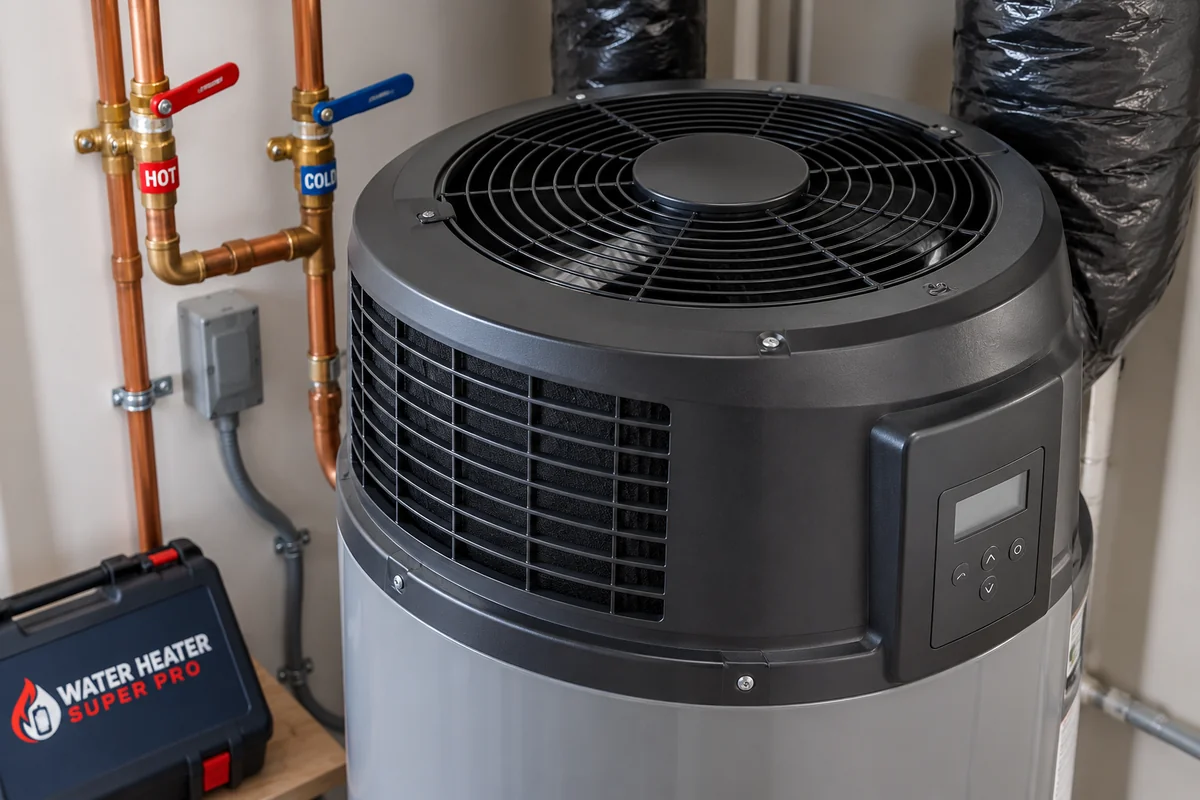
Most homeowners choose between three heat pump setups, and the right one depends on household size, available space and the existing wiring.
Garages and basements with plenty of open air
Larger households with high peak hot water use
Closets and tight rooms without enough open air
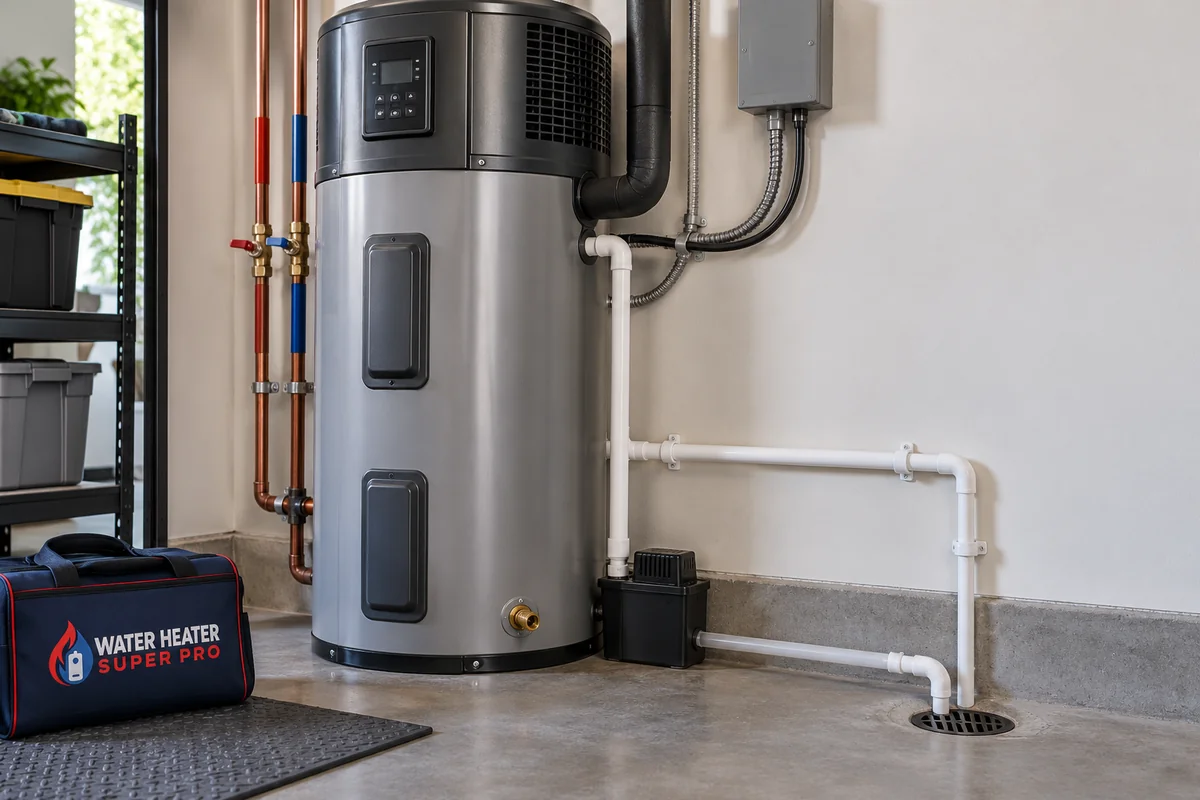
Every heat pump water heater estimate depends on the home, and these five factors explain most of the difference between two written quotes.
| Factor | Why it changes the estimate |
|---|---|
| Existing fuel type | Switching from gas means capping the gas line and often adding a new 240-volt circuit. |
| Electrical panel capacity | A full or older panel may need breaker space or an upgrade before the unit can be wired. |
| Room size and airflow | Small rooms can need ducting or louvered doors so the heat pump gets enough air to work. |
| Condensate drain access | No floor drain nearby means a longer drain line or a condensate pump added to the job. |
| Tank size and model | Larger tanks and models with higher UEF ratings change the equipment line on your estimate. |
Tell us about your current water heater and home in the short form on this page.
We match you with an independent licensed installer who covers your ZIP code.
The installer checks space, power and drainage, then gives you a written estimate.
Compare the estimate on your own time and choose what to do, with no obligation.
One form starts one heat pump water heater installation request: a single matched installer, an itemized written estimate and no cost to compare it with other quotes.
Your request goes to an installer who handles heat pump water heater installs.
Installers in our network hold the state license the work requires in your area.
Ask for equipment, labor, permit and haul-away listed line by line before you decide.
Requests go to independent licensed installers who cover your ZIP code and area.
Key facts from this page, one line each.
A heat pump water heater uses a fan and compressor to pull heat from the surrounding air and move it into the tank, much like a refrigerator working in reverse. Backup resistance elements take over during heavy demand. Because the unit moves heat rather than generating it, its UEF is higher than a standard electric tank.
Qualifying models carry the ENERGY STAR label, and every model shows its Uniform Energy Factor (UEF) and First Hour Rating (FHR) on the EnergyGuide label.
A heat pump water heater offers operating modes such as heat pump only, hybrid and electric resistance only. Hybrid mode balances efficiency and recovery for most households. Resistance mode is useful for brief periods of very high demand, such as houseguests, but it gives up most of the efficiency gain.
The EnergyGuide label on a heat pump water heater lists its Uniform Energy Factor and First Hour Rating, which let you compare models side by side. ENERGY STAR certification marks models that meet efficiency criteria set by the US EPA, and many utility programs use it as an eligibility rule.
A heat pump water heater installation needs enough surrounding air to draw heat from, plus clearance for the unit's height and service access. The manufacturer's installation manual states the minimum room volume or the options for louvered doors or ducting. Garages, basements and large utility rooms are common locations; small sealed closets often are not.
Many heat pump models are taller than the tank they replace because the heat pump sits on top. Measure ceiling height, doorways and the path into the space before choosing a model. In colder spaces the backup elements run more often, so check the air temperature range the manufacturer specifies.
A heat pump water heater produces condensate that must drain to a floor drain, condensate pump or other approved location. The fan and compressor make a steady hum similar to a dehumidifier. The unit also exhausts cool, dry air, which can help in a warm garage but may chill a nearby living space.
A unit next to a bedroom wall or home office may be noticeable, while one in a garage or unfinished basement usually is not.
Walk the proposed location with these five points in mind before you choose a model. If the condensate drain needs a pump, ask the installer to include the pump and its power supply in the written estimate.
A heat pump water heater is a strong fit when you are replacing an electric tank, have a garage, basement or large utility room, can route a condensate drain and want lower operating costs. A heat pump water heater is a weaker fit for small closets, very cold spaces or homes without enough air volume.
Compare options on our electric water heater installation and gas water heater installation pages.
An electric tank replacement is the simplest path to heat pump water heater installation, because the home already has a 240-volt circuit at the location. The installer still needs to confirm that the breaker and wire match the new unit's rating plate and that the space meets the manufacturer's air volume rules.
A gas-to-heat-pump switch typically adds a new 240-volt circuit and capping the old gas line, and the old vent may need to be sealed or reworked. If a furnace shared that vent, the installer should check that the furnace still vents correctly after the water heater is removed.
| Question | Good fit | Needs a closer look |
|---|---|---|
| Current fuel | Electric tank | Gas or propane tank |
| Location | Garage, basement, large utility room | Small closet or tight attic space |
| Drainage | Floor drain or easy drain route | No nearby drain; pump required |
| Electrical | Existing 240-volt circuit | No circuit at the location |
| Noise tolerance | Away from living spaces | Next to bedrooms or offices |
The federal Energy Efficient Home Improvement Credit (Section 25C) covered qualifying heat pump water heaters placed in service on or after January 1, 2023 and before December 31, 2025, according to the IRS. Equipment installed in 2026 does not qualify. Rebate programs from electric utilities change, so check current offers directly.
If you installed a qualifying unit in 2025, talk with a tax professional about your return. For anything installed now, focus on current utility offers and long-term operating costs. Our water heater rebates and incentives page explains what to check and what records to keep.
A heat pump water heater installation estimate should confirm the room volume or ducting plan, condensate drain route, circuit and breaker size, T&P discharge line, expansion tank needs, drain pan, clearances and the permit. Each item belongs in writing so you can compare installers on the same scope of work.
Permits and inspections go through your local building inspections office, and requirements vary by jurisdiction. Our guide to choosing a water heater installer covers what to ask, and you can request an estimate when you are ready.
The cost depends on tank size, the model's UEF rating, whether a new 240-volt circuit is needed, condensate drain routing and any ducting for small rooms. Switching from gas adds work to cap the gas line. A licensed installer reviews your space and gives you a written, itemized estimate before any work starts.
A heat pump water heater involves plumbing, a 240-volt electrical circuit, a condensate drain and a T&P relief valve discharge line. Many jurisdictions require a permit and inspection for the replacement, handled by your local building inspections office. A licensed installer typically pulls the permit and makes sure the work passes inspection.
A heat pump water heater needs more floor space and surrounding air than a standard tank, a condensate drain and usually a dedicated 240-volt circuit. It makes a low fan hum and blows cool air into the room. Recovery in heat pump mode can be slower, so backup elements help on busy days.
Some contractors install fewer heat pump water heaters because the job asks for more planning than a like-for-like tank swap: checking room volume, adding electrical capacity and routing a condensate drain. When those details are handled up front, the install is routine. Ask the installer how often they install hybrid units.
Requirements come from the manufacturer's manual and local code. Typical items include enough room volume or ducting for airflow, clearance for service, a dedicated 240-volt circuit, a condensate drain, a T&P relief valve with a proper discharge line, an expansion tank in closed systems and a drain pan where a leak could cause damage.
Fill out the estimate form on this page with your address and current water heater details. We connect you with an independent, licensed installer in our network who covers your ZIP code. The installer confirms the site conditions, explains the setup options and gives you a written estimate, and you decide with no obligation.
Open the service area directory, pick your city and you land on heat pump water heater installation for that city: what the job includes there, who issues the permit and how to get a free written estimate from a licensed local installer.
Or browse by state: North Carolina · South Carolina
Share your ZIP code and the problem. A licensed installer covering your area follows up with a written estimate.