

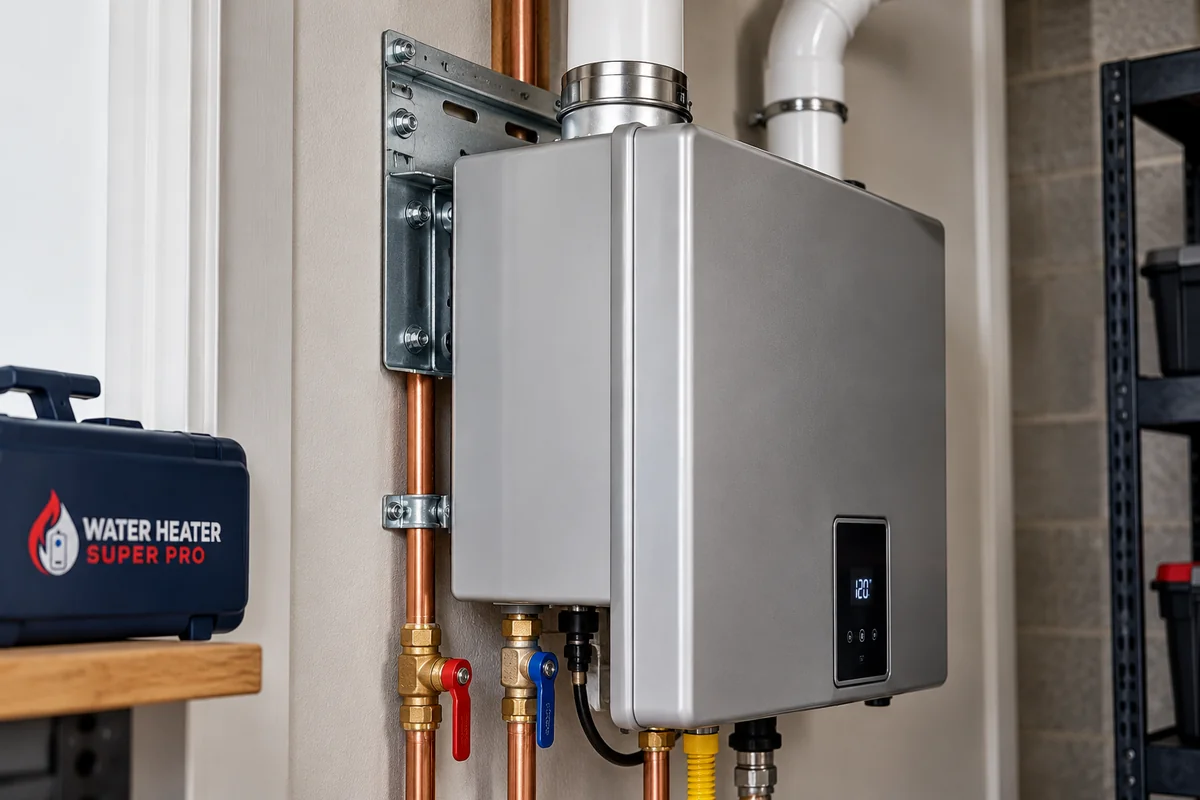
Wall Mounting and Clearance
The unit is mounted with the clearances the manufacturer lists for service and safety.
A tankless water heater only performs as well as its installation. We connect homeowners with independent, licensed local installers who size the unit correctly and handle venting, fuel supply, drainage and permits to code.
A complete tankless water heater installation covers mounting, utilities, venting and code items, so here is what a licensed installer should include.
The unit is mounted with the clearances the manufacturer lists for service and safety.
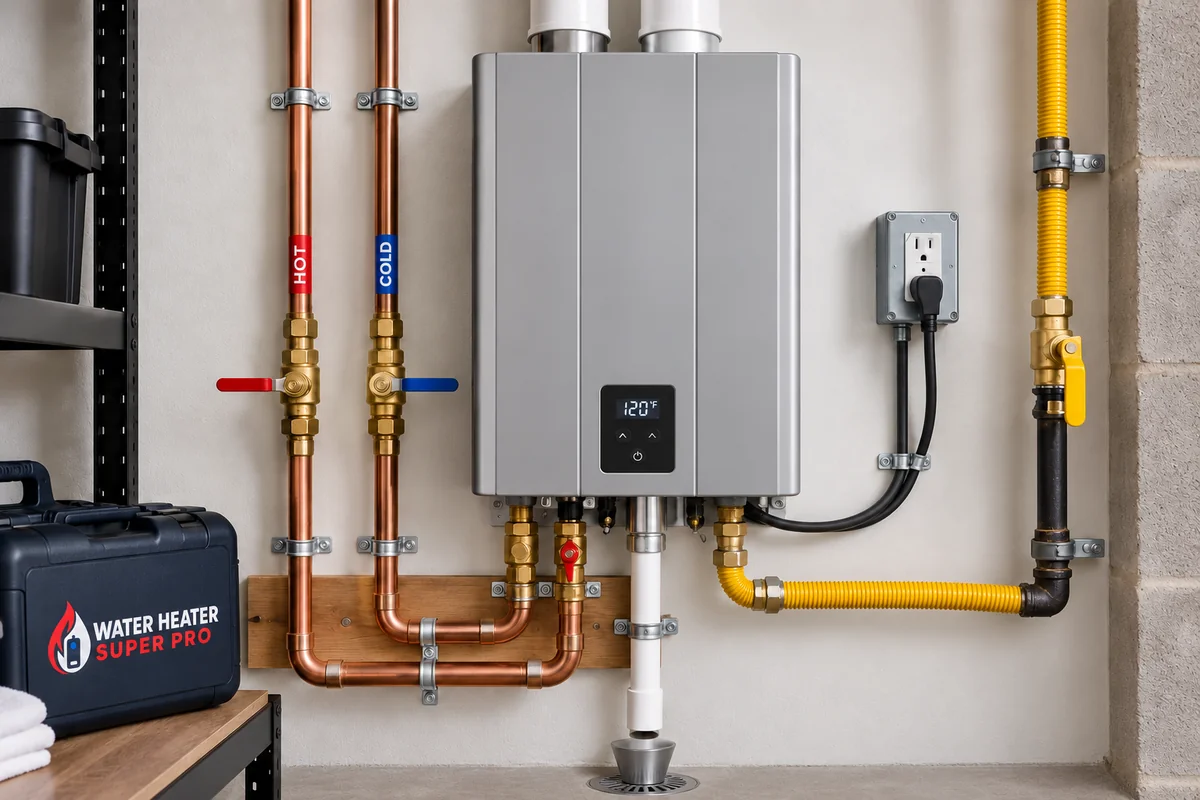
Gas piping is sized for the unit's input, or electrical circuits are added for electric.
Vent material, length and termination follow the install manual and local building code.
Service valves let the heat exchanger be flushed and descaled without cutting pipes.
Condensing units get a drain line, and every unit gets a properly piped T&P relief valve.
The installer pulls the permit where required, schedules inspection and tests the unit.
Most tankless installations fall into one of three setups, based on fuel type, mounting location and household hot water demand.
Garages, basements and utility rooms on gas
Homes with a suitable exterior wall and gas
Homes without gas service or with smaller demand
Tankless installation estimates vary from home to home, and these five factors account for most of the difference you will see in written quotes.
| Factor | Why it changes the estimate |
|---|---|
| Gas pipe sizing | Tankless units need high gas input, so an undersized line may be replaced back to the meter. |
| Vent length and type | Long runs, extra elbows or a roof exit add vent material and labor to the installation. |
| Electrical service capacity | Electric models can need new breakers, heavier wire or a service upgrade from the utility. |
| Unit size in GPM | Higher GPM units or two linked units cost more to buy and take more piping to install. |
| Mounting location | A new location means rerouting water lines, gas and condensate away from the old tank spot. |
Share your address, fuel type and hot water needs in the short form on this page.
We match you with an independent licensed installer who covers your ZIP code.
The installer checks gas, venting and location, then gives you a written estimate.
Compare the estimate on your own time and choose what to do, with no obligation.
One form starts one tankless water heater installation request: a single matched installer, an itemized written estimate and no cost to compare it with other quotes.
Your request goes to an installer who handles tankless gas and electric installs.
Installers in our network hold the state license the work requires in your area.
Ask for the unit, gas line, venting, permit and labor listed line by line up front.
Requests go to independent licensed installers who cover your ZIP code and area.
Key facts from this page, one line each.
Tankless water heater installation includes mounting the unit, connecting cold and hot water lines with isolation valves, connecting gas or electrical supply, installing venting on gas models, routing a condensate drain on condensing models, installing a pressure relief valve and testing for leaks, gas tightness and correct temperature.
The scope depends on whether the home already has a tankless unit or is moving from a tank.
A like-for-like tankless water heater installation replaces an existing tankless unit, so gas or electrical supply, venting and isolation valves are often already in place. The installer still confirms that the new model's vent material, gas input and clearances match what is on the wall before reusing any connections.
A first-time tankless water heater installation where a tank used to stand is a conversion, which usually adds gas line, vent, condensate or electrical work. Our tank-to-tankless conversion page covers that larger scope and what the estimate must list.
A tankless water heater can be installed indoors on a wall in a garage, basement, utility room or closet, and some models are rated for outdoor installation. The location must allow vent termination clearances, service access, a condensate drain route where needed and freeze protection as the manufacturer specifies.
Placing the unit closer to the main bathrooms can shorten the wait for hot water, but moving it far from the existing gas line or water lines adds piping work. The installer should explain the trade-off for your floor plan.
A gas tankless water heater installation often needs more gas input than a tank water heater, so the installer must confirm that gas line size and length can supply the unit along with other gas appliances. Venting must use manufacturer-approved materials and terminations, with correct clearances from windows, doors and air intakes.
Both checks belong in the written estimate, because gas and vent changes are the most common source of added scope.
A gas line capacity check compares the tankless unit's maximum input with the pipe size, pipe length and the combined demand of the furnace, range and other gas appliances. An undersized line can cause ignition errors under load. If a meter or service upgrade is needed, the installer will coordinate with the gas utility.
Vent material for a tankless water heater depends on the model: condensing units typically vent through PVC or CPVC pipe, while non-condensing units need heat-rated vent material. Reusing an old metal tank flue is generally not acceptable unless the manufacturer allows it, and terminations must meet clearance rules.
Electric tankless water heater installation centers on electrical capacity. Whole-house electric models often need several dedicated 240-volt circuits with large breakers and heavy wire, and the home's electrical service must have room for the load. Point-of-use electric units are smaller and may run on a single circuit near the fixture.
A licensed electrician or a licensed installer working with one should perform a load calculation before you commit to a whole-house electric tankless model.
Tankless water heater sizing should be confirmed before installation by adding the flow rates of fixtures likely to run at once and calculating the temperature rise from winter incoming water to the target output. An undersized tankless unit cannot keep up during peak demand, and the outlet temperature drops.
Ask the installer which peak flow and temperature rise they used and how the chosen model performs at that rise. Our tankless water heater sizing guide shows the calculation step by step.
A tankless water heater installation estimate should list the model and its GPM at your temperature rise, gas line or electrical work, vent material and route, condensate drain, isolation valves, relief valve, removal of old equipment and the permit. Permits and inspections go through your local building inspections office.
Each jurisdiction runs its own inspection office and permit rules. Read our guide to choosing a water heater installer for licensing questions.
Compare estimates line by line against this checklist. When you are ready, request an estimate so a licensed local installer can confirm each item on site before you commit.
There is no single average that fits every home. The estimate depends on the unit's GPM, gas line upsizing or electrical work, vent length and type, the mounting location, removal of the old tank and the permit. A licensed installer reviews your home and gives you a written, itemized estimate before work begins.
Yes, in most cases. Tankless installation involves gas piping or high-amp electrical work, venting and a T&P relief valve, and many jurisdictions require a permit. Permits and inspections are handled by your local building inspections office. A licensed installer typically pulls the permit and makes sure the work passes inspection.
Installing a tankless unit yourself is risky. Gas line sizing, vent termination and combustion air must meet the manufacturer's manual and local code, and electric models need large dedicated circuits. Mistakes can cause poor performance or safety hazards, and permit rules often require licensed work. Check your warranty registration terms with the manufacturer before you decide.
Yes, if the unit is sized for it. Add the flow rates of both showers and any other fixtures that run at the same time, then compare that total with the unit's GPM rating at your winter temperature rise. Larger homes sometimes use two linked units. The installer confirms sizing during the assessment.
Tankless water heaters typically last longer than tank units, which many manufacturers rate for roughly 8 to 12 years. Lifespan depends on water hardness, install quality and how often the heat exchanger is descaled. Registering the unit with the manufacturer after installation and keeping maintenance records helps with warranty claims later.
Fill out the estimate form on this page with your address and project details. We connect you with an independent, licensed installer in our network who covers your ZIP code. The installer assesses your home, explains the setup options and gives you a written estimate, and you decide with no obligation.
Open the service area directory, pick your city and you land on tankless water heater installation for that city: what the job includes there, who issues the permit and how to get a free written estimate from a licensed local installer.
Or browse by state: North Carolina · South Carolina
Share your ZIP code and the problem. A licensed installer covering your area follows up with a written estimate.