

Heat Exchanger Descaling
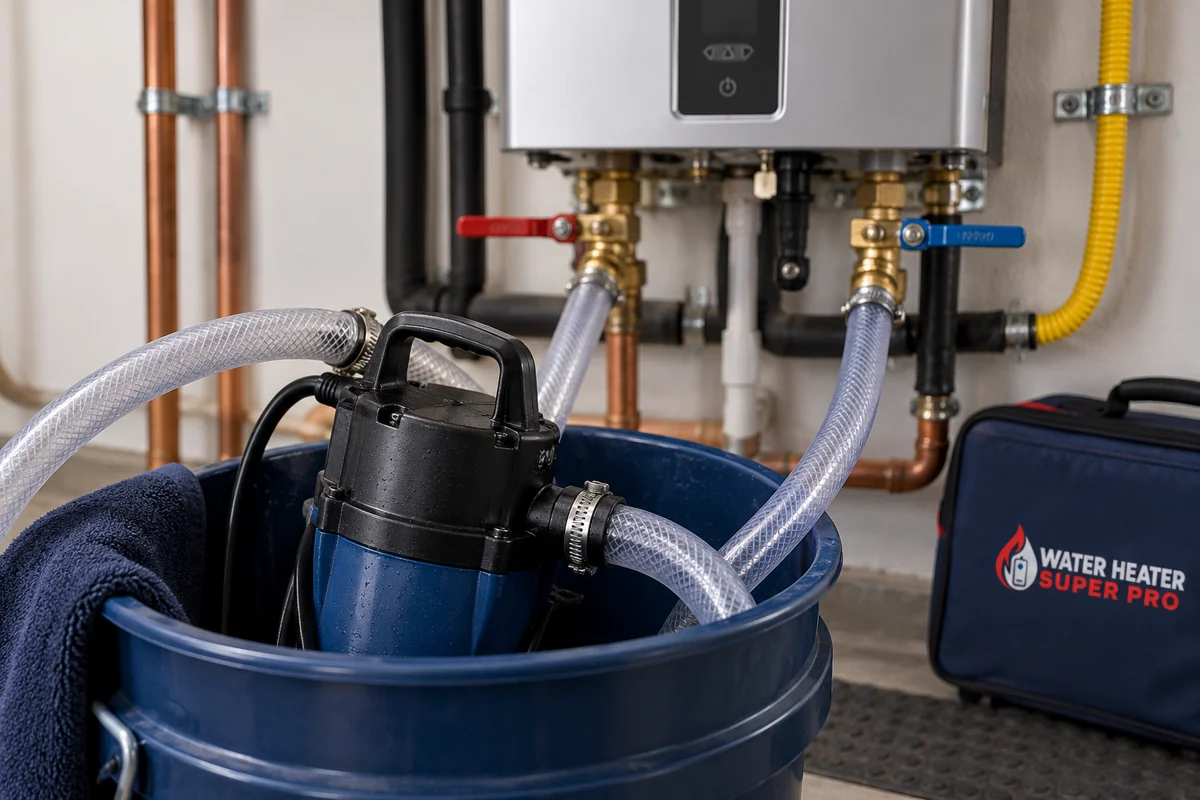
A descaling solution is circulated through the heat exchanger to remove mineral scale.
Regular maintenance keeps a tankless water heater heating evenly and helps prevent scale-related error codes. We connect homeowners with independent, licensed local installers who can descale the unit, clean filters and check venting and combustion.
A complete tankless water heater maintenance visit goes beyond a quick flush, so here is what a licensed installer should check and service.
A descaling solution is circulated through the heat exchanger to remove mineral scale.
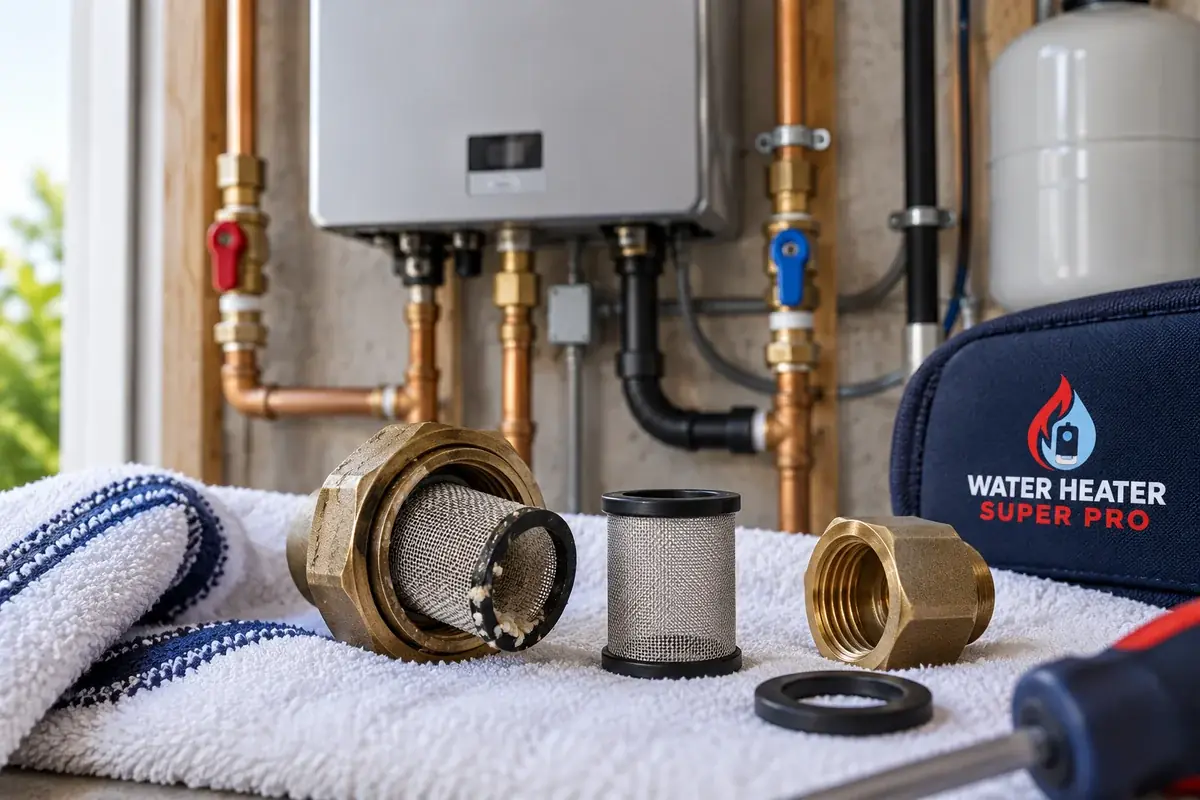
The cold water inlet filter is removed, cleaned and reinstalled to keep flow steady.
Isolation valves are checked for leaks and added if the unit was installed without them.
Vent pipes, terminations and air intake are inspected for blockage, damage and leaks.
The T&P relief valve and its discharge line are checked for proper operation and route.
Stored error codes are reviewed so early problems can be addressed before they spread.
Most homeowners choose from three tankless maintenance approaches, depending on water hardness, how the unit was installed and its current condition.
Units installed with service valves in place
Units installed without isolation valves
Homes with hard water and frequent scale codes
Tankless maintenance estimates differ from home to home, and these five factors explain most of the difference you will see between written quotes.
| Factor | Why it changes the estimate |
|---|---|
| Service valves present | Units without isolation valves need a valve kit added before descaling can be done properly. |
| Scale buildup level | Heavy scale from hard water takes longer to dissolve and may reveal heat exchanger damage. |
| Number of units | Homes with two linked tankless units need each heat exchanger descaled and checked separately. |
| Brand and model | Some models need specific filters, gaskets or service procedures listed in the manual. |
| Parts found worn | A worn filter, gasket or relief valve found during service adds parts to the written estimate. |
Share your unit's brand, age and last service date in the short form on this page.
We match you with an independent licensed installer who covers your ZIP code.
The installer inspects the unit and valves, then gives you a written service estimate.
Compare the estimate on your own time and choose what to do, with no obligation.
One form starts one tankless water heater maintenance request: a single matched installer, an itemized written estimate and no cost to compare it with other quotes.
Your request goes to an installer who descales and services tankless water heaters.
Installers in our network hold the state license the work requires in your area.
Ask for descaling, valve kits, filters and any parts listed line by line up front.
Requests go to independent licensed installers who cover your ZIP code and area.
Key facts from this page, one line each.
Tankless water heater maintenance removes the mineral scale that deposits inside the heat exchanger. Scale reduces heat transfer, makes the unit work harder and can trigger overheating or scale warnings. Routine descaling, filter cleaning and safety checks help a tankless water heater perform as designed and support a long service life.
Tankless units typically last longer than tank water heaters, but that advantage depends on care. Many manufacturers describe required maintenance in the owner's manual and warranty documents, so keep records of each service.
Descaling a tankless water heater means circulating a manufacturer-approved descaling solution through the heat exchanger with a small pump connected to the isolation valves. After the time the manual specifies, the system is flushed with clean water, the inlet filter is cleaned and the unit is restarted and tested.
The process requires shutting off power and gas to the unit and handling chemicals, so many homeowners prefer to have a professional do it.
Follow your model's manual for the solution type and circulation time. If the installation lacks isolation valves, ask an installer to add them first, because they make every future descaling much easier.
The inlet water filter on a tankless water heater is a small screen at the cold water connection that catches sediment and debris. A clogged inlet filter reduces flow, and low flow can stop the unit from firing or cause fluctuating temperature. Many manuals list filter cleaning as a routine task.
Water must be shut off and pressure relieved before removing the filter. If a flow-related error appears, a dirty filter is one of the first things a technician will check. See tankless water heater repair for other common causes.
Hard water contains dissolved calcium and magnesium that form scale when heated, so a tankless water heater in a hard water home needs descaling more often. The right interval depends on water hardness, household hot water use and the manufacturer's maintenance schedule in the owner's manual.
Ask the installer whether the manufacturer recommends a specific type of treatment for your model.
Water hardness varies by source, and homes on private wells can have very different mineral content from homes on municipal water. Your water provider can usually share hardness information, and well owners can order a water test. That result helps set a realistic tankless descaling interval.
A scale-reduction system or water softener can slow scale buildup in a tankless water heater when the water is hard. Manufacturers differ on which treatment types they recommend, so match any system to the model's manual. Treatment reduces descaling frequency but does not replace periodic maintenance.
A tankless water heater maintenance visit should check vent and intake terminations for blockage, the condensate drain and neutralizer on condensing units, the pressure relief valve, gas connections for leaks, combustion and burner condition, and any stored error code history. Each check catches problems before they cause a shutdown.
Ask the technician to write down what was checked and the date, and keep that record with the owner's manual. Gas and combustion checks belong with a licensed professional.
| Task | Who usually does it | Notes |
|---|---|---|
| Descaling the heat exchanger | Professional or experienced homeowner | Requires isolation valves and approved solution |
| Inlet filter cleaning | Homeowner or professional | Shut off water and relieve pressure first |
| Vent and intake check | Homeowner (visual) and professional | Do not alter vent pipe |
| Condensate drain and neutralizer | Professional | Condensing units only |
| Gas and combustion check | Licensed professional | Includes leak testing |
Tankless water heater maintenance focuses on descaling and filters, while tank water heater maintenance focuses on flushing sediment, checking the anode rod and testing the T&P relief valve. Neither type is maintenance-free, and both benefit from a written service record kept with the owner's manual.
When you are ready, request an estimate for a maintenance visit.
Tank water heater maintenance covers flushing sediment from the bottom of the tank, inspecting the anode rod that protects the steel tank from corrosion and testing the T&P relief valve. Our tank water heater maintenance page lists the full tank checklist.
Tankless upkeep centers on scale, while tank upkeep centers on sediment and corrosion, so the better fit depends on your water and how much routine care you want. The tankless water heaters overview compares both types on sizing, lifespan and installation scope.
A tankless water heater needs periodic descaling of the heat exchanger, cleaning of the inlet filter and a check of the venting, combustion air intake and T&P relief valve. Condensing models also need the condensate drain and neutralizer checked. The manufacturer's manual lists the schedule, which depends on water hardness and usage.
Service cost depends on whether isolation valves are already installed, how much scale has built up, the number of units, the brand and model and any worn parts found during the visit. Request a written estimate here, and the installer lists descaling, valve kits and parts as separate line items you can review.
Most manufacturers recommend descaling at regular intervals rather than draining the way you would a tank. Homes with hard water or heavy use may need service yearly or more often, while softened water can extend the interval. Check your manual for the recommended schedule, and ask the installer to check scale levels.
Scale buildup in the heat exchanger is the most common problem, and routine maintenance is the main way to prevent it. Scale cuts efficiency, triggers error codes and can shut the unit down. A clogged inlet filter is the next most frequent issue, and both are handled during a standard maintenance visit.
Tankless water heaters typically last longer than tank models, which many manufacturers rate for roughly 8 to 12 years. Regular descaling, a clean inlet filter and correct venting all help a tankless unit reach the long end of its expected life. Keeping service records also helps if you need to file a warranty claim.
Some plumbers prefer tank units because tankless water heaters need correct sizing, gas line and venting work, and periodic descaling that homeowners sometimes skip. When maintenance is missed, scale causes error codes and repair visits. A unit with service valves and a regular descaling schedule avoids most of the problems that give tankless units a bad reputation.
Open the service area directory, pick your city and you land on tankless water heater installation for that city: what the job includes there, who issues the permit and how to get a free written estimate from a licensed local installer.
Or browse by state: North Carolina · South Carolina
Share your ZIP code and the problem. A licensed installer covering your area follows up with a written estimate.