

Full Diagnosis
The installer tests the burner or elements, the controls, the valves and the tank first.
No hot water, a leak, a dripping valve or strange noises. Find out what usually causes the problem and whether a repair makes sense, then request an estimate from a licensed local installer in our network.
An installer in our network starts with a diagnosis, then puts the repair, the parts and any code items in a written estimate before work begins.
The installer tests the burner or elements, the controls, the valves and the tank first.
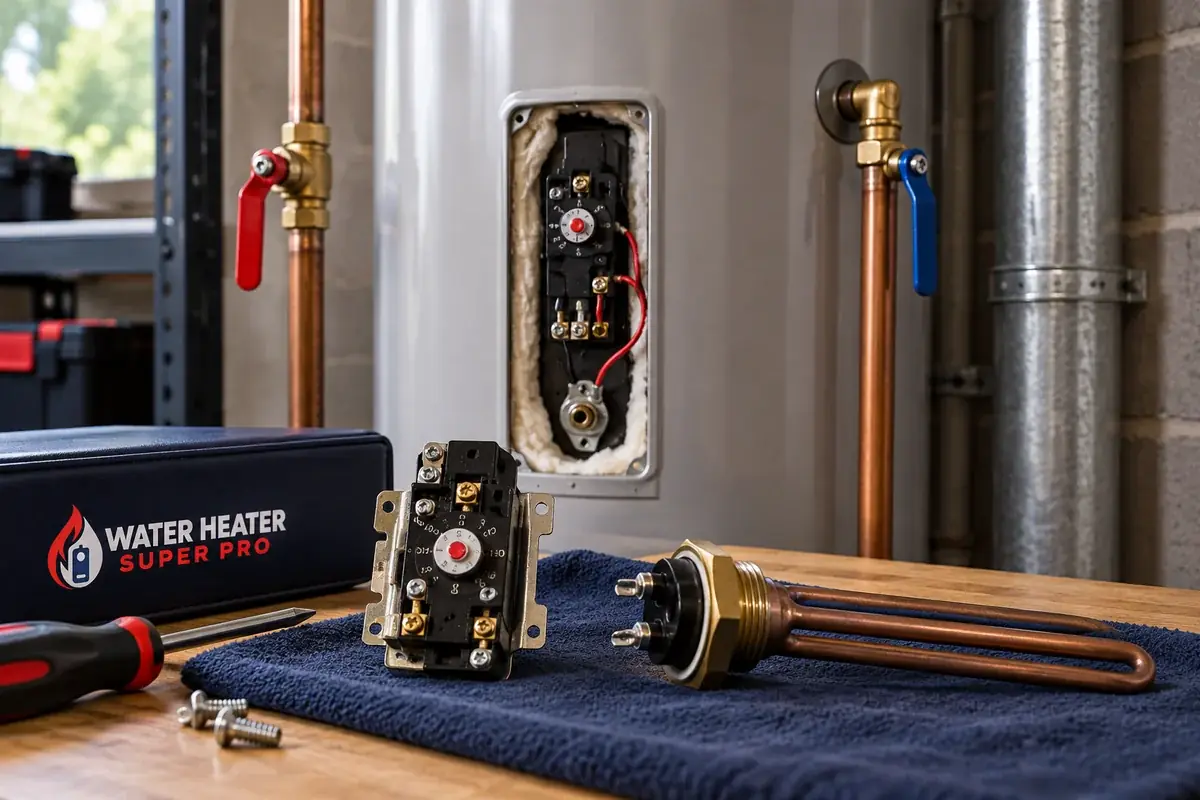
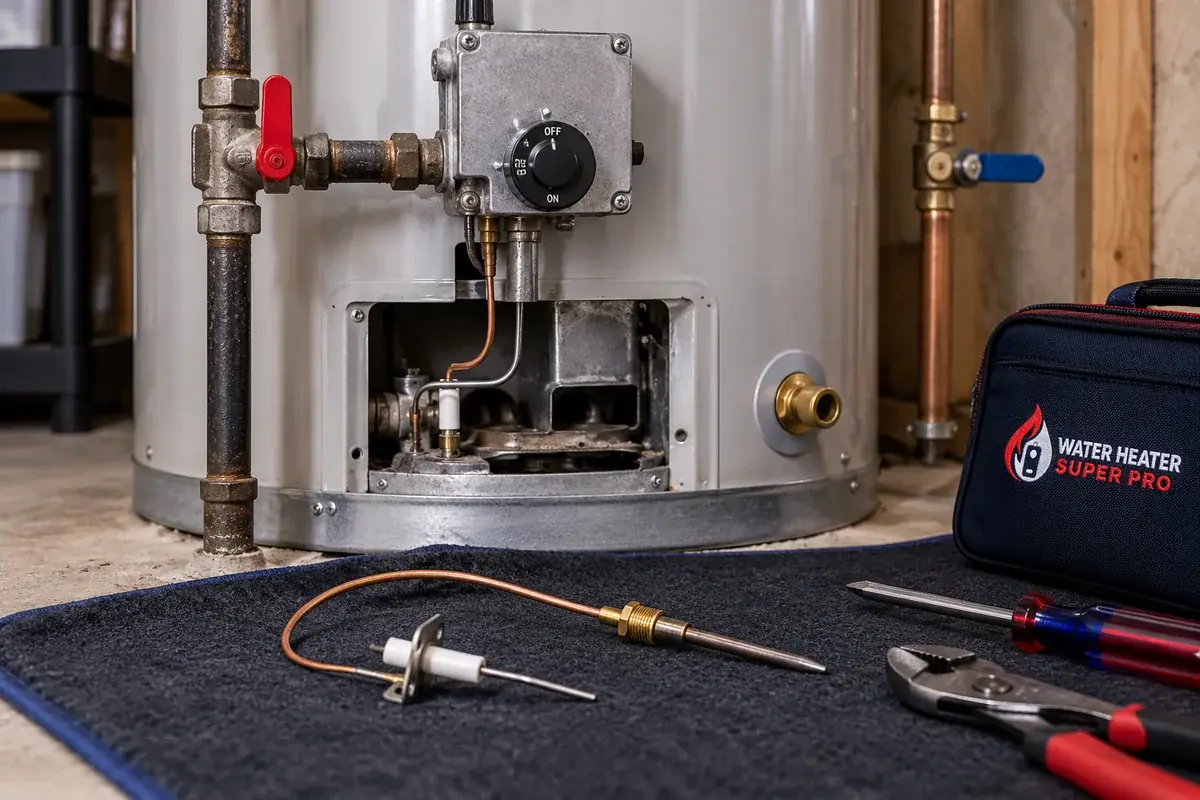
Thermocouples, gas valves, igniters, elements and thermostats are replaced when they fail.
Leaks are traced to the fittings, the T&P valve, the drain valve or the tank itself.
A faulty T&P relief valve or drain valve is replaced and the discharge line is checked.
The installer checks system pressure and the expansion tank when the T&P valve drips.
Unit age, tank condition and part needs are weighed so you can choose with clear facts.
Most repair requests fall into one of three groups, and each group points to a different set of parts and checks for the installer.
Units that run cold, lukewarm or run out too soon
Water on the floor, a dripping valve or a wet pan
Error codes, flow problems or scale in tankless units
Repair estimates vary from home to home, and the installer bases the written price on what the diagnosis finds and on these factors.
| Factor | Why it changes the estimate |
|---|---|
| Part Needed | A thermocouple or heating element is a simpler fix than a gas valve or control board. |
| Unit Type and Brand | Gas, electric and tankless units use different parts, and some brands need specific ones. |
| Unit Age | Older tanks may need several fixes at once, which can tip the choice toward replacement. |
| Access and Location | Units in attics, crawlspaces or tight closets take longer to reach and work on safely. |
| Code Items Found | A missing expansion tank or a bad T&P discharge line may be added to the repair scope. |
Use this form to share your ZIP code, unit type and the problem you are seeing.
We connect you with an independent licensed installer who covers your ZIP code.
The installer checks your setup and gives you a written, itemized repair estimate.
Compare the scope and approve the work only if it fits. There is no obligation to hire.
One form starts one water heater repair request: a single matched installer, an itemized written estimate and no cost to compare it with other quotes.
Your request goes to an installer who handles water heater repair in your area.
Installers in our network are independent contractors licensed by the state board.
Each estimate lists the unit or parts, labor and permit items so you can compare clearly.
Requests go to installers who cover your ZIP code, and you never have to hire anyone.
Key facts from this page, one line each.
Water heater repair is usually worth it when the tank is not leaking, the unit is well within the 8 to 12 years many manufacturers rate tanks for, and the problem traces to one replaceable part. Repair is rarely worth it on an aging tank with rust, repeated failures or a leak from the tank body.
The age of the unit is encoded in the serial number on the rating plate. If the tank is near the end of its rated life, ask the installer to quote both a repair and a water heater replacement so you can compare.
Repeated repairs on the same unit are a signal. Rust in the hot water, a rumbling tank and a growing list of service calls usually point toward replacement rather than another part.
Gas water heater repair usually addresses a thermocouple or flame sensor that no longer keeps the pilot lit, a failed igniter on electronic-ignition models, a faulty gas control valve, a blocked burner or flue, or a venting problem that trips a safety shutoff. Each is a part-level repair on a sound tank.
If you smell gas, do not try to relight the pilot or operate switches. Leave the home and contact your gas utility from a safe location.
Pilot and ignition problems are among the most frequent gas water heater repair requests. A pilot that lights but will not stay lit usually points to the thermocouple or flame sensor, while electronic models may need an igniter, control board or power check. Relight only by following the instructions on the unit label.
Venting problems and flammable vapor sensors can shut a gas burner down after a few minutes of running. A blocked flue, backdrafting or poor combustion air needs diagnosis, not repeated relighting. A yellow or sooty flame is another sign the burner or air supply needs attention from a qualified installer.
| Symptom | Likely cause |
|---|---|
| Pilot will not stay lit | Thermocouple or flame sensor, gas control |
| No ignition on electronic models | Igniter, control board, power supply |
| Burner shuts off after a few minutes | Venting problem or flammable vapor sensor |
| Yellow or sooty flame | Burner or combustion air problem |
| Not enough hot water | Sediment buildup, thermostat setting, dip tube |
Electric water heater repair usually targets a burned-out upper or lower heating element, a faulty thermostat, a tripped high-limit reset, or a tripped breaker on the dedicated 240-volt circuit. Hard water and sediment can shorten element life. These are part-level repairs when the tank itself is not leaking.
Electric water heaters run on high voltage, so testing elements and thermostats should be left to a qualified installer.
Upper and lower heating elements fail in different ways. A failed upper element or thermostat often means no hot water at all, while a failed lower element leaves water lukewarm or running out quickly. Sediment on the tank bottom can bury the lower element and shorten its life.
Heat pump water heater repair adds a compressor, fan and condensate drain to the usual element and thermostat checks. A clogged condensate line can leave water on the floor, and restricted airflow around the unit reduces performance. Testing these components on a high-voltage appliance is work for a qualified installer.
| Symptom | Likely cause |
|---|---|
| No hot water at all | Tripped breaker, high-limit reset, upper element or thermostat |
| Lukewarm water | Lower element or thermostat |
| Hot water runs out quickly | Lower element, sediment, undersized tank |
| Breaker trips repeatedly | Shorted element or wiring fault |
| Popping or crackling | Sediment on the bottom or around elements |
Water heater repair requests usually start from one of four symptoms: no hot water, a leak, an expansion tank problem, or a dripping relief valve. Each symptom has its own causes and safety steps, so start with the page that matches what you are seeing before you request an estimate.
Each symptom page lists the safe checks you can do yourself and the signs that mean you should stop and let a licensed installer diagnose the water heater.
Water heater noises, odors and discolored water each point to specific causes. Popping or rumbling usually comes from sediment on the tank bottom, a rotten egg smell often relates to the anode rod reacting with the water, and rusty hot water can mean a depleted anode rod or a corroding tank.
Sediment and odor problems can sometimes be handled with flushing or an anode change, which falls under water heater maintenance. Rust combined with an older tank more often points to replacement.
A water heater repair request should tell the installer the fuel type, the brand and approximate age from the rating plate, the tank location, the exact symptom, when it started, and anything already tried. That information helps the installer arrive prepared and judge whether a repair or a replacement is likely.
Writing down the rating plate details before you fill out the estimate form saves a step and avoids guessing the age of the unit.
Repair cost depends on the failed part, the unit type and brand, its age, how hard the heater is to reach and any code items found, such as a missing expansion tank. An installer in our network diagnoses the problem first and gives you a written, itemized estimate before any repair work begins.
No hot water or not enough hot water is the most common complaint. On gas units the cause is often a pilot, thermocouple or igniter, and on electric units a heating element or thermostat. Sediment buildup, a dripping T&P relief valve and small leaks at fittings are also frequent repair requests.
Repair usually makes sense when the tank is sound and a single part such as a thermocouple, element or valve has failed. Replacement is usually wiser when the tank itself leaks or the unit is near the end of its rated life. The installer weighs age, condition and parts in a written estimate.
Policies vary, so read yours or ask your agent. Many policies treat a worn-out water heater as maintenance, while sudden water damage from a leak may be handled differently. If you file a claim, a written diagnosis from a licensed installer that describes the cause and condition of the unit can help.
Many manufacturers recommend flushing tank water heaters about once a year, and more often with hard water. Flushing removes sediment that reduces efficiency, causes rumbling and can shorten tank life. Check your owner's manual, and ask the installer to add a flush to a repair visit if the tank has never been drained.
Many homeowners flush a tank by turning off the fuel or power, closing the cold supply and draining through the drain valve with a hose. Older drain valves can stick or leak, and gas controls need care. If the valve will not open or the tank has never been flushed, a licensed installer is the safer choice.
Open the service area directory, pick your city and you land on water heater repair for that city: what the job includes there, who issues the permit and how to get a free written estimate from a licensed local installer.
Or browse by state: North Carolina · South Carolina
Share your ZIP code and the problem. A licensed installer covering your area follows up with a written estimate.