

Error Code Diagnosis
The installer reads the error code and history to narrow down the failing component.
When a tankless water heater shows an error code or runs cold, the cause is often scale, ignition, gas supply, venting or a flow sensor. We connect homeowners with independent, licensed local installers who can diagnose the unit and explain repair or replacement options.
A tankless water heater repair visit should start with a clear diagnosis, so here is what a licensed installer typically checks and explains.
The installer reads the error code and history to narrow down the failing component.
Igniter, flame sensor and gas pressure are tested when a gas unit fails to light.
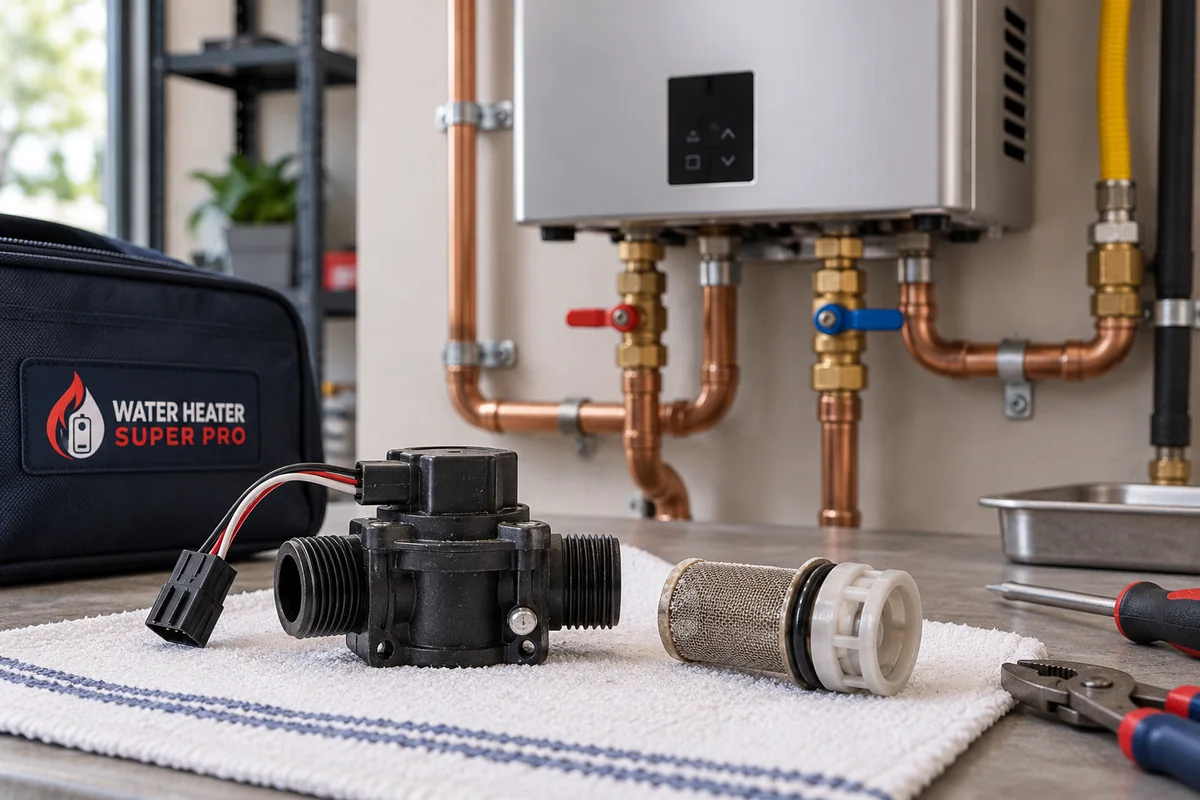
The flow sensor and inlet filter are checked when the unit will not fire at low flow.
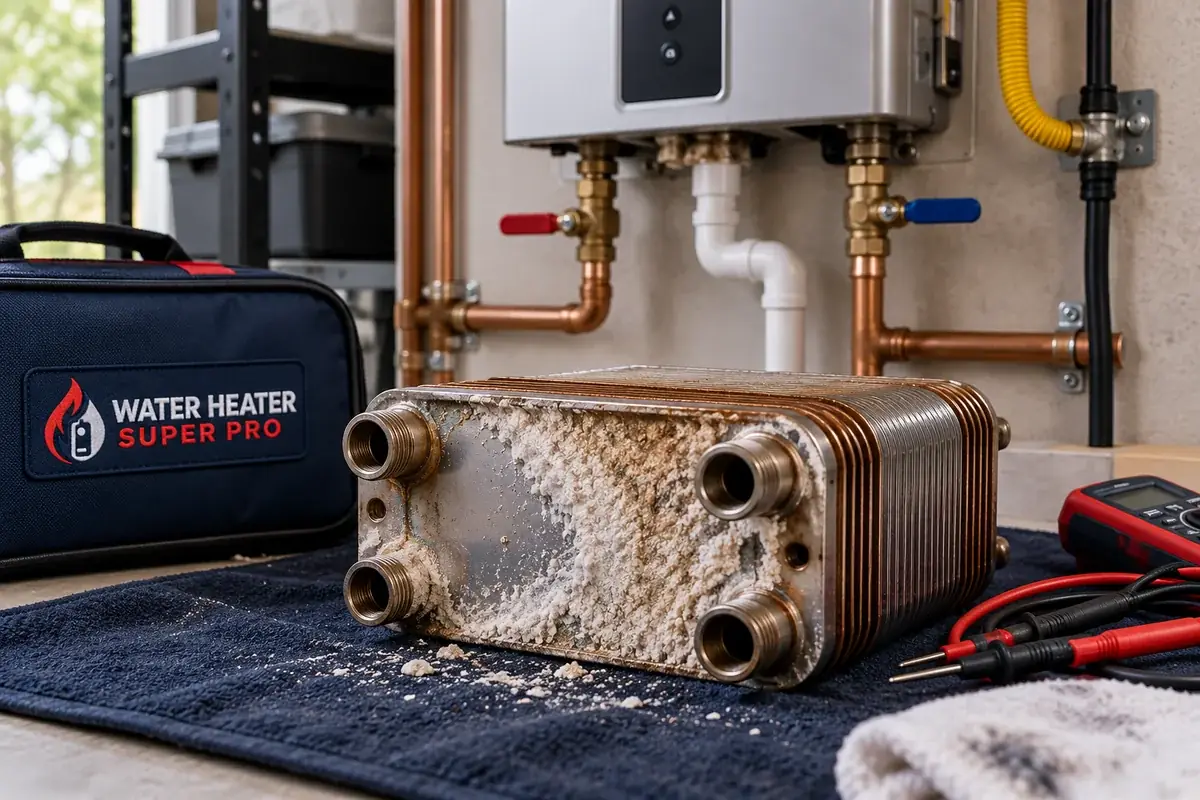
Scale buildup is assessed, and descaling is done when it is the root of the problem.
Vent pipes and terminations are checked for blockage, damage or improper connections.
You get a written estimate that explains repair versus replacement for your tankless unit.
Most tankless water heater repair visits end in one of three outcomes, based on the diagnosis, the unit's age and its condition.
Units with one failed part such as an igniter
Units losing heat or flagging scale codes
Older units with a failed heat exchanger or leak
Tankless repair estimates depend on what the diagnosis finds, and these five factors explain most of the difference between written quotes for the same problem.
| Factor | Why it changes the estimate |
|---|---|
| Failed component | Igniters and sensors differ from control boards or heat exchangers in parts and labor. |
| Brand and parts | Some brands use proprietary parts, so availability and part cost change the repair line. |
| Unit age | Older units may need several parts at once, which can make replacement the better value. |
| Scale buildup level | Heavy scale from hard water can add descaling time or damage the heat exchanger. |
| Venting or gas issues | Problems in the vent run or gas supply add work outside the unit itself to the repair. |
Share your unit's brand, error code and symptoms in the short form on this page.
We match you with an independent licensed installer who covers your ZIP code.
The installer diagnoses the unit on site, then gives you a written repair estimate.
Compare repair and replacement on your own time and choose, with no obligation.
One form starts one tankless water heater repair request: a single matched installer, an itemized written estimate and no cost to compare it with other quotes.
Your request goes to an installer who diagnoses and repairs tankless water heaters.
Installers in our network hold the state license the work requires in your area.
Ask for diagnosis, parts and labor listed line by line before any repair is made.
Requests go to independent licensed installers who cover your ZIP code and area.
Key facts from this page, one line each.
A tankless water heater error code is brand-specific and often model-specific, so the same number can mean different things on different units. Find the meaning in the owner's manual or manufacturer support documents, using the model and serial number from the rating plate. Note the code before resetting the unit.
Water Heater Super Pro is not affiliated with any manufacturer, and we do not publish code lists because they vary and change between model generations.
A tankless water heater error code usually points to a category, such as ignition, flame loss, overheating, venting, flow or scale. The code tells the technician where to look, not always which part failed, so diagnosis still involves testing the components in that category before a repair is quoted.
Recording the error code before a reset preserves the clue a technician needs, because some units clear the display once power cycles. Write down the code, the time it appeared and what was running, and keep a photo of the rating plate with the model and serial number.
Scale buildup is one of the most common causes of tankless water heater problems. Minerals in hard water deposit inside the heat exchanger, reducing heat transfer, triggering overheat or scale warnings and causing fluctuating temperatures. Descaling with a circulation pump and an approved solution, as the manufacturer directs, usually resolves scale-related symptoms.
If the unit has never been descaled, or the home has hard water, scale is a likely suspect. Our tankless water heater maintenance page explains descaling and how often to consider it.
Ignition failure in a gas tankless water heater can come from a closed gas valve, an undersized gas line, low propane, a dirty flame sensor, a faulty igniter or a control board issue. An undersized gas line often shows up when several gas appliances run at once, causing the unit to lose flame.
If you smell gas, leave the home and contact your gas utility from outside.
A homeowner can safely confirm that the gas valve to the tankless water heater is open and, on propane, that the tank is not empty. A homeowner can also note whether the failure happens only when the furnace or range is running, which helps the technician suspect gas supply.
Gas pressure testing and ignition part replacement on a tankless water heater belong with a licensed professional. The technician measures pressure under load, inspects the flame sensor and igniter and checks the control board, then explains in writing which part failed and why.
A tankless water heater will not fire if its flow sensor does not detect enough water movement. A clogged inlet water filter, debris in the flow sensor, a stuck mixing valve or very low-flow fixtures can keep flow below the activation threshold. Symptoms include no hot water at one tap while others work.
Cleaning the inlet filter screen is a routine maintenance step in many manuals. Sensor replacement and diagnosing crossover between hot and cold lines are jobs for a qualified technician.
Venting problems cause many tankless water heater shutdowns. Blocked vent terminations from nests, leaves or snow, damaged pipe, too many elbows or a vent installed outside the manufacturer's limits can trigger safety codes. Condensing units can also shut down when a clogged condensate line backs water into the unit.
Check outside that the vent and intake terminations are not obviously blocked, without opening or altering the vent system. If the venting was recently changed, mention it when you request an estimate.
Tankless water heater repair usually makes sense when the problem is scale, a sensor, an igniter or another replaceable part and the heat exchanger is sound. Replacement becomes worth considering when the heat exchanger leaks, parts are no longer available, repairs keep repeating or the unit was undersized from the start.
Ask the technician to put the diagnosis, the failed part and the repair option in writing so you can compare it with a replacement. Have this information ready before the visit:
Sharing these details up front shortens diagnosis. If replacement makes sense, see our tankless water heater installation page; for tank units, see no hot water troubleshooting.
Warning signs include recurring error codes, water that runs hot then cold, the unit failing to ignite, visible leaks, rumbling or banging sounds and low hot water flow. Some of these come from scale or a clogged filter and can be repaired. A licensed installer diagnoses the cause and explains repair or replacement.
Scale buildup in the heat exchanger is the most common issue, especially where water is hard. Scale lowers efficiency, triggers error codes and can shut the unit down. Ignition failure, a dirty inlet filter, a faulty flow sensor and venting blockages are also frequent causes of tankless water heater repair visits.
Tankless water heater repair often involves gas pressure, ignition, venting and electrical controls, which call for a professional licensed under your state's rules. A handyman may lack the license, tools and diagnostic training for gas tankless units. Check your warranty registration terms with the manufacturer, since unqualified repairs can affect coverage on some models.
Many manufacturers rate tank water heaters for roughly 8 to 12 years, and tankless units typically last longer when they are descaled on schedule. Lifespan depends on water hardness, maintenance and install quality. For older tankless units with a failing heat exchanger, replacement can make more sense than another repair.
Most manufacturers recommend periodic descaling, and the right interval depends on your water hardness and usage. Homes with hard water or heavy use may need it yearly or more often, while softened water can stretch the interval. Follow the manufacturer's schedule in your manual, and ask the installer to check scale levels.
The cost to flush a tankless water heater depends on whether isolation valves are already installed, how much scale has built up, the brand and model and whether the inlet filter or other parts need attention. Request a written estimate here, and the installer lists the descaling work and any added parts separately.
Open the service area directory, pick your city and you land on tankless water heater installation for that city: what the job includes there, who issues the permit and how to get a free written estimate from a licensed local installer.
Or browse by state: North Carolina · South Carolina
Share your ZIP code and the problem. A licensed installer covering your area follows up with a written estimate.