

Tank Flush
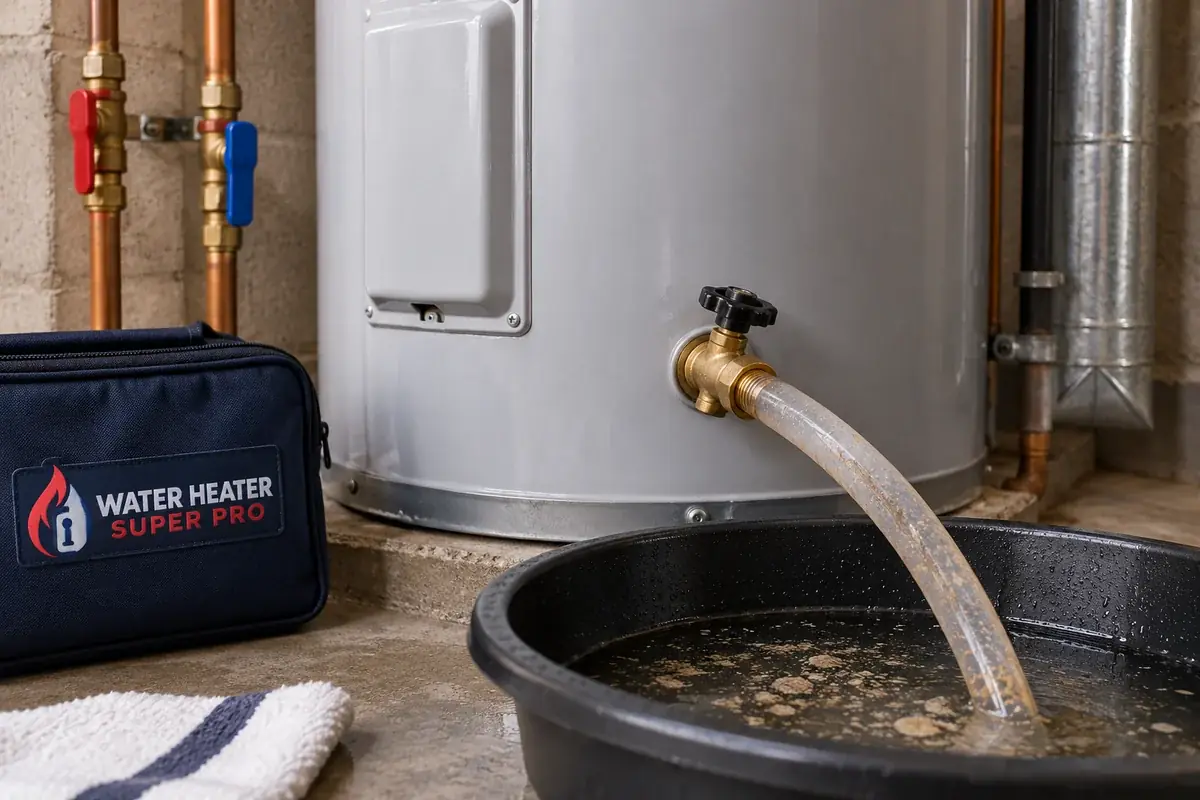
Sediment is drained from the tank bottom to help efficiency and reduce rumbling noises.
Flushing, anode rod inspection, relief valve testing and the right temperature setting help a water heater run efficiently. Request an estimate and we connect you with a licensed local installer in our network.
A maintenance visit from an installer in our network should cover these checks, and the written estimate should name each one before work starts.
Sediment is drained from the tank bottom to help efficiency and reduce rumbling noises.
The anode rod is inspected and replaced when worn so the steel tank stays protected.
The relief valve is tested, and the discharge line is checked for a proper termination.
Gas burners, flues and venting, or electric elements and thermostats, are inspected.
Tankless units are flushed with a descaling solution, and the inlet filters are cleaned.
System pressure and the expansion tank charge are checked in closed plumbing systems.
Maintenance needs differ by unit type, so installers in our network tailor each visit to tank, tankless or heat pump equipment and to local water.
Gas or electric tank units in normal home use
Gas or electric tankless units with hard water scale
Hybrid heat pump units in garages or basements
A maintenance estimate is usually simple, but the installer will adjust the scope and price after checking these factors at your home.
| Factor | Why it changes the estimate |
|---|---|
| Unit Type | Tank, tankless and heat pump units each need different steps, tools and service time. |
| Sediment Buildup | A tank that has never been flushed can take longer to drain and may clog the valve. |
| Anode Rod Condition | A worn anode rod adds a replacement part, and some rods are hard to remove by hand. |
| Water Hardness | Hard water builds scale faster, which can call for a longer descaling cycle on tankless units. |
| Valve and Code Items | A stuck T&P valve or a missing expansion tank adds parts to the maintenance scope. |
Use this form to share your ZIP code, unit type and the age of your heater.
We connect you with an independent licensed installer who covers your ZIP code.
The installer checks your setup and gives you a written, itemized maintenance estimate.
Compare the scope and approve the work only if it fits. There is no obligation to hire.
One form starts one water heater maintenance request: a single matched installer, an itemized written estimate and no cost to compare it with other quotes.
Your request goes to an installer who handles water heater maintenance in your area.
Installers in our network are independent contractors licensed by the state board.
Each estimate lists the unit or parts, labor and permit items so you can compare clearly.
Requests go to installers who cover your ZIP code, and you never have to hire anyone.
Key facts from this page, one line each.
Water heater maintenance includes flushing sediment from the bottom of the tank, inspecting or replacing the anode rod, testing the T&P relief valve, checking the thermostat setting, and looking over the venting, gas connections or electrical connections. On tankless units, maintenance centers on descaling the heat exchanger and cleaning inlet filters.
Not every visit needs every item. Ask the installer which checks your unit needs based on its age, fuel type and water quality, and what each check found.
Water heater maintenance flushing removes sediment that settles on the tank bottom, where it insulates the water from the burner or covers the lower element. Sediment and hard water reduce efficiency and can cause popping or rumbling noises. A flush drains water through the drain valve until it runs clear.
A first flush on an older tank that has never been drained can leave the drain valve leaking afterward, and heavy sediment may clog it partway. That is one reason some homeowners prefer an installer to handle the first flush and replace the drain valve if it will not seal.
Popping and rumbling noises usually point to sediment on the tank bottom, where water trapped under the layer boils as the burner or element heats it. Other sounds have different causes. The water heater noises guide explains which sounds point to sediment and which point to something else.
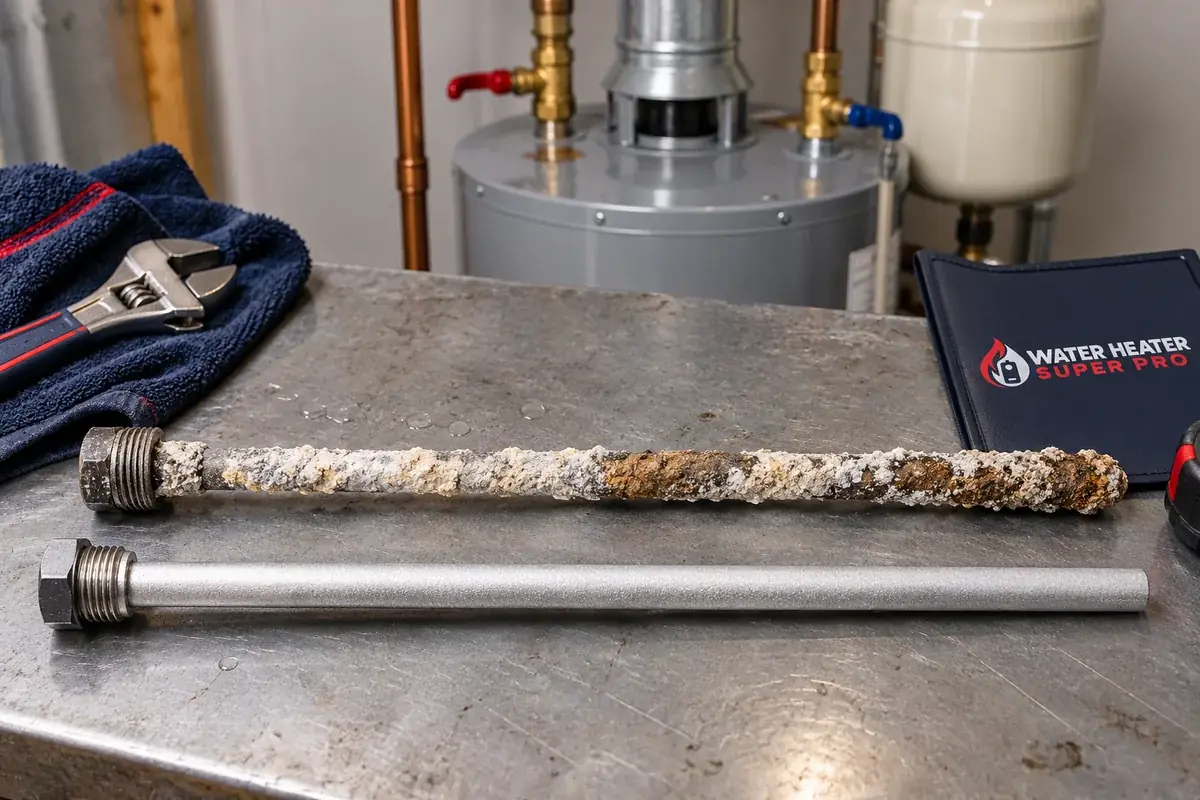
The anode rod is a metal rod inside a steel water heater tank that corrodes in place of the tank lining. Once the anode rod is depleted, the tank itself begins to corrode, so inspecting the rod and replacing it when it is heavily worn is a core part of water heater maintenance.
An anode rod should be replaced when much of its core wire is exposed or the rod has worn thin along its length. Anode rods can be hard to remove, and some need clearance above the tank for a full-length rod. Our anode rod guide covers the types and replacement timing.
A rotten egg smell in hot water is often linked to the anode rod reacting with the water supply. Changing the anode type can reduce the odor in many cases. If only the hot water smells, the water heater is the likely source rather than the plumbing or the water supply itself.
Water heater maintenance tests the T&P relief valve by briefly lifting its lever to confirm water flows out of the discharge line and stops when released. The valve is typically rated at 150 psi and 210°F, and a valve that will not open or keeps dripping afterward should be replaced by a qualified installer.
The US DOE suggests a setting of 120°F for most households, which balances comfort, energy use and scald risk. If the valve drips regularly, see the relief valve leaking page, since the cause may be pressure or thermal expansion rather than the valve itself.
Water heater maintenance is worth it on units that are well within the 8 to 12 years many manufacturers rate tanks for and that are not leaking. On a tank near or past that range, with rust in the hot water or moisture at the base, maintenance rarely changes the outcome and replacement planning makes more sense.
Planning ahead lets you compare options instead of making a rushed decision after a failure. See water heater replacement for what a complete replacement should include.
| Condition | Better choice |
|---|---|
| Younger tank, some sediment noise | Maintenance |
| Odor in hot water, tank otherwise sound | Maintenance (anode check) |
| Tank near or past its rated life, never maintained | Ask about replacement first |
| Rusty hot water and moisture at the tank base | Replacement |
| Leak from the tank body | Replacement |
Tankless water heaters need periodic descaling according to the manufacturer instructions, because hard water leaves mineral scale in the heat exchanger. Descaling usually involves isolation valves and a pump that circulates a cleaning solution, and inlet water filters plus, on gas models, the venting and air intake also need periodic checks.
Details vary by brand and model. The tankless water heater maintenance page covers the process and the signs that descaling is overdue.
Yes. Tank water heaters benefit from regular flushing to remove sediment, an anode rod inspection, a T&P relief valve test and a check of venting or elements. Tankless units need periodic descaling per the manufacturer and clean inlet filters. Heat pump units also need a clean air filter and a clear condensate drain.
Many homeowners flush a tank by turning off the fuel or power, closing the cold supply and draining through the drain valve with a hose. Old drain valves can stick or leak, and gas controls need care. If the tank has never been flushed, or the valve will not open, a licensed installer is the safer choice.
Tankless water heaters need periodic descaling, and the interval depends on the manufacturer and your water hardness. Many makers suggest about once a year, and homes with hard water may need it more often. Check the owner's manual or the error history, and ask the installer to recommend a schedule for your unit.
Sediment builds up on the tank bottom, which reduces efficiency, causes rumbling or popping noises and can overheat the lower tank on gas units. Over time the drain valve may clog and the tank can wear out sooner. In tankless units, scale buildup can trigger error codes and reduce hot water flow.
Many manufacturers rate tank water heaters for roughly 8 to 12 years, and tankless units typically last longer. Routine maintenance such as flushing, anode rod checks and descaling helps a unit reach that range. The serial number on the rating plate encodes the manufacture date, so you can check the age of your heater.
Maintenance cost depends on the unit type, how much sediment or scale has built up, the condition of the anode rod and any valve or code items the installer finds. Tankless descaling and heat pump service involve different steps than a tank flush. An installer in our network gives you a written, itemized estimate first.
Open the service area directory and pick your city. Each city lists the water heater services available there, the local permit office and a free form for a written estimate from a licensed local installer.
Or browse by state: North Carolina · South Carolina
Share your ZIP code and the problem. A licensed installer covering your area follows up with a written estimate.