

Sizing by GPM
The installer sizes the unit by gallons per minute at the temperature rise you need.
A tankless water heater heats water only when a tap opens, so it does not keep a tank of water hot around the clock. We connect homeowners with independent, licensed local installers for tankless installation, conversion, repair and maintenance.
A tankless water heater project should cover sizing, utilities and code items, so here is what a complete job from a licensed installer includes.
The installer sizes the unit by gallons per minute at the temperature rise you need.
Gas line size or electrical capacity is checked so the unit gets the fuel it requires.
Gas units get venting and combustion air that match the manufacturer's install manual.
Isolation valves are added so the heat exchanger can be descaled during maintenance.
A T&P relief valve with a proper discharge line, plus a drain line on condensing units.
The installer handles the permit where required and tests the unit at startup with you.
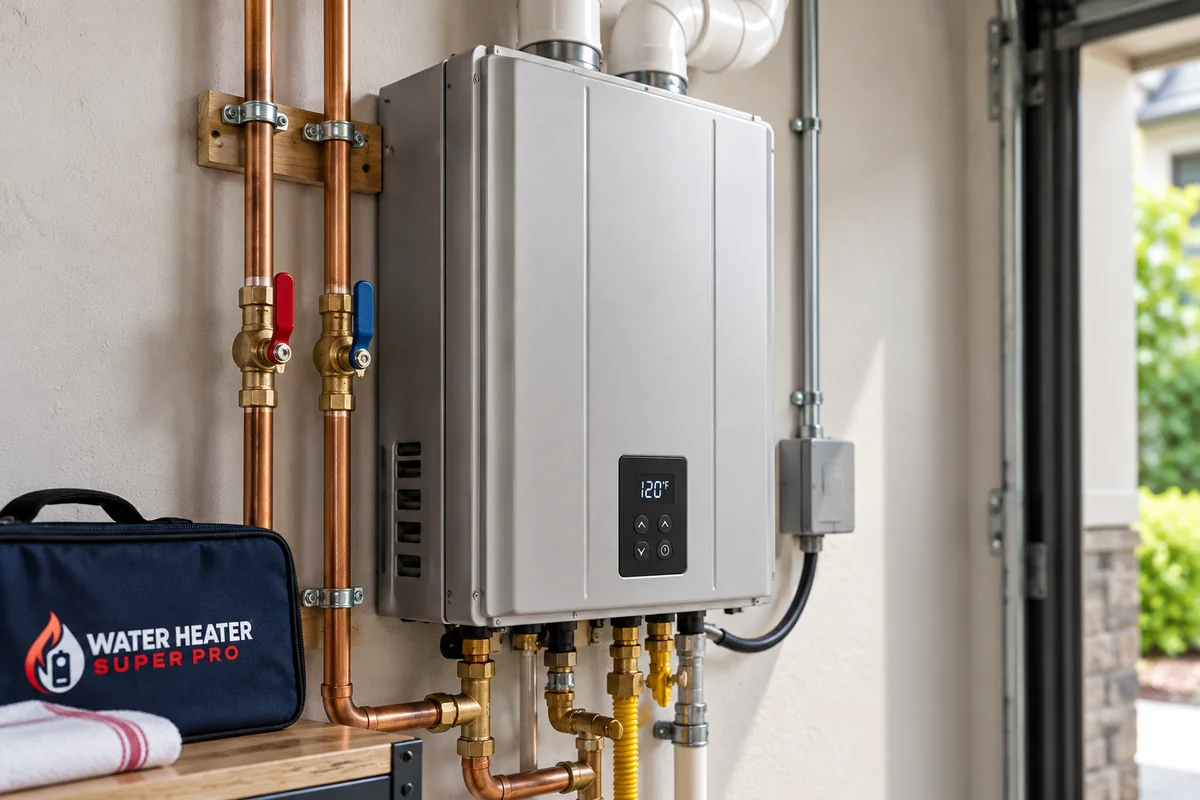
Homeowners usually pick from three tankless setups, and the best fit depends on fuel type, hot water demand and where the unit can go.
Homes with natural gas service and high demand
Gas homes where venting runs are short and direct
Smaller homes or point-of-use electric spots
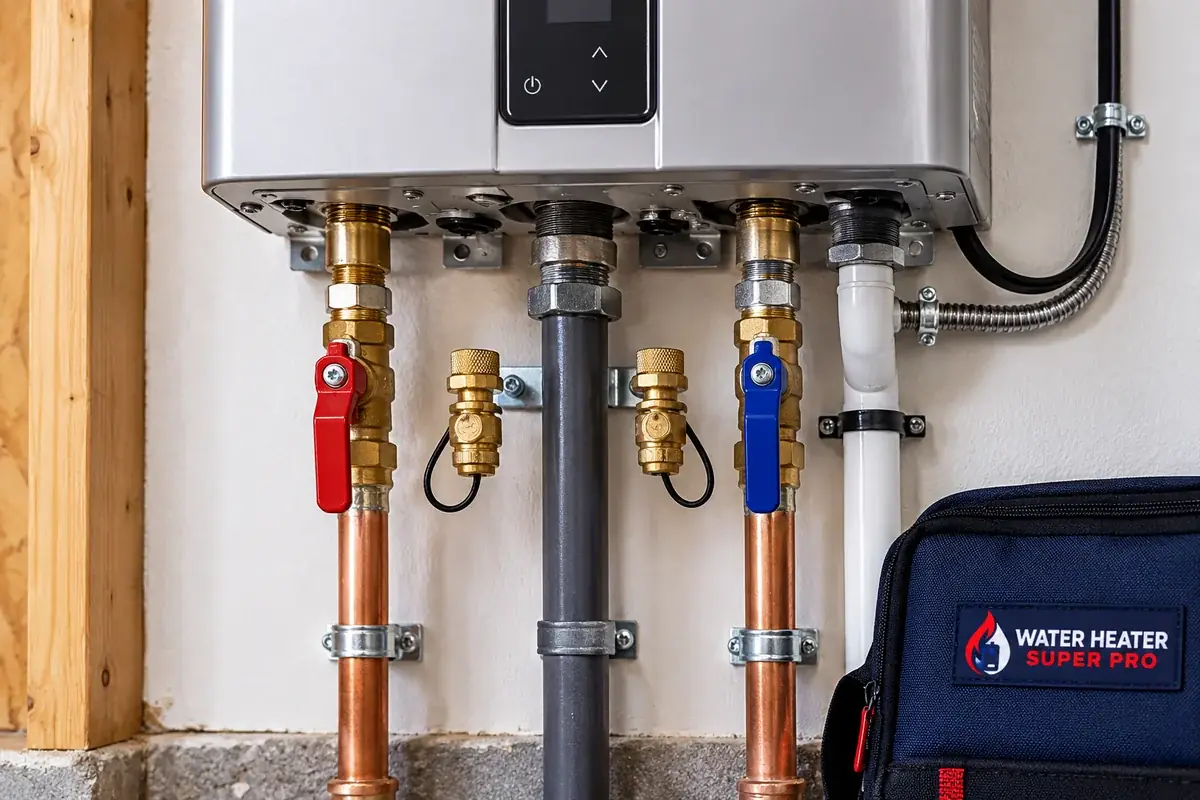
Two tankless estimates for the same house can look different, and these five factors explain most of the gap between written quotes.
| Factor | Why it changes the estimate |
|---|---|
| Gas line size | Tankless units draw more gas at once, so an undersized line may need upsizing to the unit. |
| Venting route | Vent length, material and exit point through a wall or roof change labor and parts. |
| Required GPM | More fixtures running at once means a larger unit or two units linked together. |
| Electrical capacity | Electric tankless units need high amperage, which can require panel or service upgrades. |
| Install location | Moving from the old tank spot to an outside wall or garage changes piping and venting. |
Tell us about your home, fuel type and current water heater in the form on this page.
We match you with an independent licensed installer who covers your ZIP code.
The installer checks gas, power and venting, then gives you a written estimate.
Compare the estimate on your own time and choose what to do, with no obligation.
One form starts one tankless water heater installation request: a single matched installer, an itemized written estimate and no cost to compare it with other quotes.
Your request goes to an installer who sizes, vents and installs tankless units.
Installers in our network hold the state license the work requires in your area.
Ask for the unit, gas or electrical work, venting and permit listed line by line.
Requests go to independent licensed installers who cover your ZIP code and area.
Key facts from this page, one line each.
A tankless water heater heats water only when a hot tap opens, firing a gas burner or switching on electric elements as water passes through a heat exchanger. When the tap closes, heating stops. Because a tankless water heater stores no hot water, it has no standby heat loss.
A flow sensor tells the control board how much water is moving, and the board adjusts the burner or elements to hit the set temperature. If too many fixtures run at once, the outlet temperature drops, which is why sizing by GPM matters more than anything else in a tankless decision.
A condensing tankless water heater uses a second heat exchanger to capture heat from exhaust gases, so the exhaust can vent through plastic pipe and the unit produces acidic condensate that must be drained. A non-condensing tankless water heater sends hotter exhaust out through stainless steel or other heat-rated vent material.
The right choice depends on where the unit will hang and how the vent and drain can be routed.
A condensing tankless water heater generally carries a higher UEF and allows more flexible vent routing, often in PVC or CPVC pipe where the manufacturer approves it. The trade-off is a condensate drain line, usually with a neutralizer, routed to a floor drain, condensate pump or other approved location.
A non-condensing tankless water heater skips the condensate line for the unit itself but needs heat-rated venting such as stainless steel. Non-condensing models have a single heat exchanger and a lower UEF than condensing models, and vent routing is usually less flexible because of the hotter exhaust.
| Feature | Condensing | Non-condensing |
|---|---|---|
| Heat exchangers | Primary plus secondary | Primary only |
| Vent material | Often PVC or CPVC per manufacturer | Stainless steel or other heat-rated vent |
| Condensate drain | Required, often with neutralizer | Not required for the unit itself |
| Efficiency (UEF) | Higher | Lower |
A gas tankless water heater burns natural gas or propane and can deliver higher flow rates, but it needs adequate gas line capacity and proper venting. An electric tankless water heater needs no venting, but whole-house electric models draw large amounts of current and often require multiple dedicated circuits.
Check your fuel and electrical panel before comparing models, because the supply you already have often decides the choice.
A natural gas or propane tankless water heater is the usual choice for whole-house use in homes with gas service. The unit often needs more gas input than a tank water heater, so the installer must confirm the gas line size and length and route a vent that the manufacturer approves.
An electric tankless water heater is common for point-of-use applications, such as a single sink far from the main water heater. Whole-house electric tankless models can require several high-amperage circuits and sometimes an electrical service upgrade, so an installer should check the panel before you choose.
A tankless water heater is sized by two numbers: peak flow in gallons per minute (GPM) and temperature rise. Add the flow rates of fixtures likely to run at the same time, then subtract incoming water temperature from your target output temperature. The unit must deliver that peak GPM at that rise.
Incoming groundwater is colder in winter, so size for the coldest season you expect.
Manufacturers publish charts showing how many GPM each model delivers at different temperature rises. Our step-by-step tankless sizing guide walks through the full calculation with examples.
A tankless water heater provides continuous hot water within its GPM limit, saves floor space and avoids standby heat loss, and tankless units typically last longer than tank units. A tank water heater costs less to install in most homes, delivers a large burst of hot water at once and is simpler to replace like-for-like.
Compare your peak demand, current fuel, venting and how long you plan to stay. For a deeper comparison, see tank vs tankless water heaters.
| Factor | Tankless | Tank |
|---|---|---|
| Hot water supply | Continuous within GPM limit | Limited by tank size and recovery |
| Sizing metric | GPM at temperature rise | First Hour Rating (FHR) |
| Standby heat loss | None | Yes |
| Space | Wall-mounted, compact | Floor space for the tank |
| Installation scope | Often gas, vent, condensate or electrical changes | Usually simpler like-for-like |
| Maintenance | Periodic descaling and inlet filter cleaning | Flushing, anode rod and T&P checks |
| Lifespan | Typically longer | Many rated roughly 8 to 12 years |
Tankless water heater services fall into four project types: new installation, conversion from a tank, repair and routine maintenance. Each type has a different scope and different questions for the installer. Water Heater Super Pro connects homeowners with independent, licensed local installers who handle each type of tankless project.
Use these pages to understand the work before you request an estimate:
Pick the page that matches your project, then request an estimate with your current water heater type and fuel so a licensed local installer can confirm the scope on site.
The charge depends on the unit size in GPM, gas line upsizing or electrical work, venting length and material, the install location and the permit. Converting from a tank adds removal and new piping. A licensed installer reviews your home and gives you a written, itemized estimate so you can compare it line by line.
Tankless water heaters typically last longer than tank models, which many manufacturers rate for roughly 8 to 12 years. Actual life depends on water hardness, how often the heat exchanger is descaled and how the unit was installed. Homes with hard water benefit most from regular descaling per the manufacturer's schedule.
First, the upfront project is usually larger than a tank swap, because gas lines, venting or electrical service may need upgrades. Second, a tankless unit needs periodic descaling and can deliver a short burst of cooler water when demand starts. Correct GPM sizing and routine maintenance keep both issues manageable for most households.
Scale buildup in the heat exchanger is the most common problem, especially with hard water. Scale reduces efficiency, triggers error codes and can cause the unit to shut down. Other frequent issues include ignition failure, clogged inlet filters and venting problems. Regular descaling and filter cleaning by a licensed installer prevent most of them.
Size a tankless water heater by gallons per minute at the temperature rise your home needs. Add the flow rates of the fixtures you expect to run at once, then check the unit's rated GPM at your incoming water temperature. Winter groundwater is colder, so the installer sizes for the coldest months.
Retailers set their own installation programs and pricing, and many use third-party installers. Ask what is included, such as gas line work, venting, permit and old tank haul-away, before you buy. You can also request a written estimate here from an independent licensed installer and compare the line items side by side.
Open the service area directory, pick your city and you land on tankless water heater installation for that city: what the job includes there, who issues the permit and how to get a free written estimate from a licensed local installer.
Or browse by state: North Carolina · South Carolina
Share your ZIP code and the problem. A licensed installer covering your area follows up with a written estimate.