

Closed system check
Looks for a check valve, backflow preventer or pressure-reducing valve that closes it off.
When heated water has nowhere to expand, pressure builds in your plumbing. An expansion tank absorbs that pressure. Request an estimate and we connect you with a licensed local installer in our network.
An expansion tank visit confirms whether your plumbing is a closed system and then sizes, charges and mounts the tank to suit your water heater.
Looks for a check valve, backflow preventer or pressure-reducing valve that closes it off.
Measures static water pressure with a gauge to size the tank and to set its air charge.
Tests the current expansion tank for a failed bladder or a shell that is full of water.
Matches the expansion tank to heater capacity, water pressure and incoming temperature.
Sets the tank air pressure to match house pressure before the tank goes on the line.
Supports the tank so its weight when full of water does not strain the pipe or fittings.
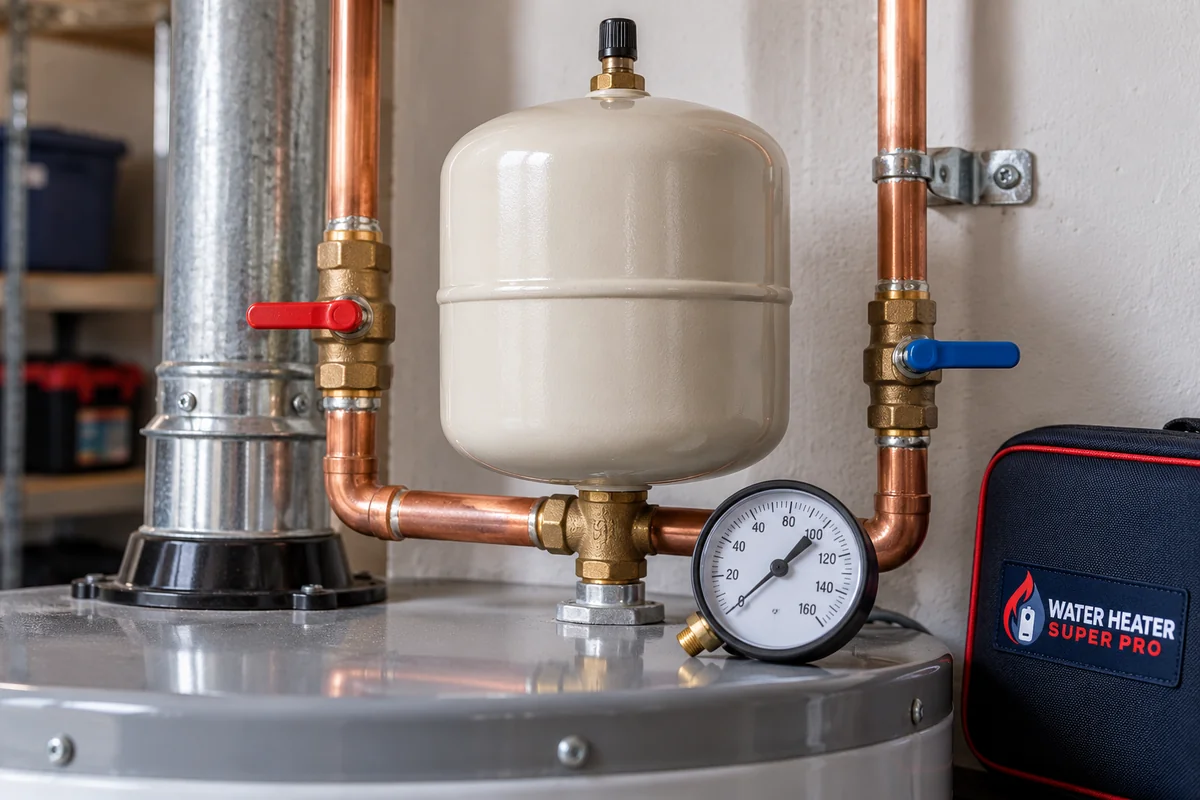
Expansion tank work falls into one of three jobs, and the installer recommends one based on your water pressure, plumbing and water heater condition.
Closed systems with no expansion control installed
Tanks with a failed bladder or full of water
Older heaters with pressure damage or leaks
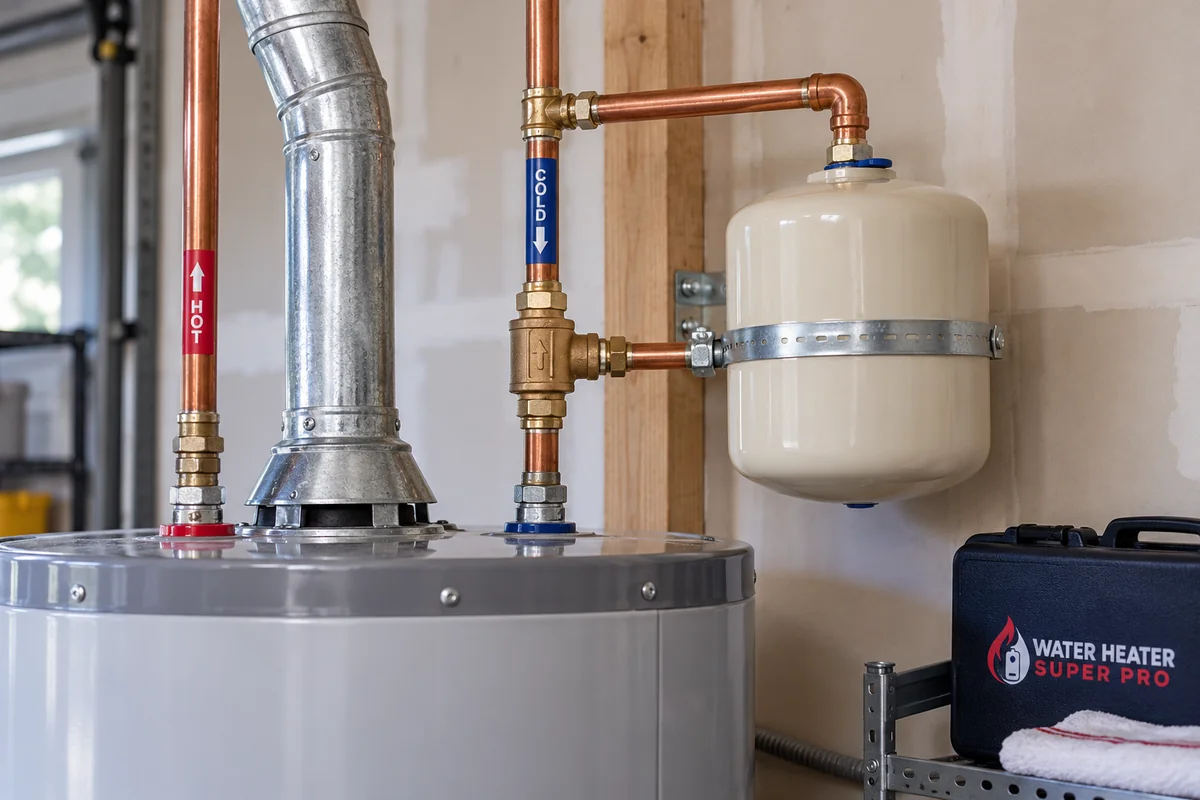
An expansion tank estimate depends on the tank size, your house water pressure and how much piping work the installer needs to fit it properly.
| Factor | Why it changes the estimate |
|---|---|
| Tank size | A larger water heater or higher supply pressure calls for a larger expansion tank. |
| New or replacement | Adding a first expansion tank means new piping, while a swap reuses the existing connection. |
| Water pressure | High pressure may also need a pressure-reducing valve to be installed, adjusted or replaced. |
| Mounting location | Tight closets, attics and crawl spaces take longer to reach and need stronger support. |
| Water heater condition | A tank already damaged by pressure may make replacing the water heater the better choice. |
Fill in the form on this page with your ZIP code and what you see at the expansion tank.
We connect you with an independent licensed installer who covers your ZIP code.
The installer checks pressure and the expansion tank and writes up an itemized estimate.
Approve the work, choose a different option or decline. You have no obligation to hire.
One form starts one expansion tank installation or replacement request: a single matched installer, an itemized written estimate and no cost to compare it with other quotes.
Your request goes to an installer who installs and replaces water heater expansion tanks.
Installers in our network are independent businesses licensed for water heater work.
Each estimate lists the tank, parts, labor and any valve work so you can compare quotes.
Your request goes to installers who cover your ZIP code and the type of job you need.
Key facts from this page, one line each.
A water heater expansion tank is a small tank on the cold water supply that contains an air cushion separated from the water by a diaphragm or bladder. When water heats and expands, the extra volume moves into the expansion tank instead of raising pressure throughout the plumbing system, the water heater and its relief valve.
A diaphragm or bladder inside the expansion tank separates the water side from a pressurized air cushion. As heated water expands, it pushes against the diaphragm and compresses the air. When a fixture opens and pressure drops, the air cushion pushes that water back into the plumbing system.
An open plumbing system lets expanded water push back toward the municipal supply, so pressure stays fairly stable. A closed system, created by a check valve, backflow preventer or pressure-reducing valve, traps that water. In a closed system, pressure climbs each time the water heater runs unless thermal expansion control absorbs it.
Thermal expansion control, usually a water heater expansion tank, is required when the plumbing system is closed by a check valve, backflow preventer or pressure-reducing valve that prevents water from flowing back toward the street. Local code and the water heater manufacturer instructions determine the specific requirement in each home.
Many homes have a pressure-reducing valve near the main shutoff or a check valve at the meter. If yours does, a new water heater installation or replacement will typically include thermal expansion control. Your local building inspections office applies the code in your jurisdiction.
The installer will check your system when quoting a water heater replacement.
Signs of a failed water heater expansion tank include a T&P relief valve that drips after heating cycles, water pressure that spikes when the water heater runs, a tank that feels full and heavy throughout, water coming from the air valve on the tank, and rust or leaks on the tank body or its connection.
A dripping relief valve has several possible causes, so the relief valve leaking page is worth reading alongside this one. If water is pooling near the water heater, the leaking water heater page helps you find the source.
If you notice two or more of these signs, request a diagnosis. A dripping relief valve has several possible causes, so the installer should measure pressure before replacing parts.
A water heater expansion tank is sized by the water heater capacity and the incoming water pressure, using the manufacturer sizing chart. The tank air pre-charge should match the home static water pressure before installation, because an incorrectly pre-charged or undersized tank will not absorb expansion properly.
Static water pressure is measured with a gauge on a hose bib or the water heater drain valve while no fixtures are running. The installer uses that reading both to choose the tank size from the sizing chart and to set the air pre-charge. Very high readings may call for pressure-reducing valve adjustment or replacement.
The air pre-charge is set with a tire-style gauge and pump at the air valve before the tank is connected to water. Factory pre-charge often differs from the home pressure, so leaving it unchanged is a common mistake. A tank set too low fills with water early and leaves little room for expansion.
A failed water heater expansion tank is usually replaced rather than repaired, because a ruptured diaphragm or bladder inside the sealed tank cannot be fixed. Replacement involves shutting off the cold supply, relieving pressure, removing the old tank, and installing a correctly sized, pre-charged tank supported on the piping or a bracket.
If the water heater itself is aging, replacing both at the same time may make sense. Mention the age of the water heater when you request an estimate, and consider routine water heater maintenance to keep the relief valve and expansion tank checked.
| Issue | Typical response |
|---|---|
| Pre-charge low, diaphragm intact | Adjust air charge to match water pressure |
| Water at the air valve | Replace the tank |
| Tank waterlogged | Replace the tank |
| Leak at the connection | Repair the fitting |
| No tank in a closed system | Install thermal expansion control |
Water expands as it heats. In a closed system with a check valve, backflow preventer or pressure-reducing valve, that extra volume has nowhere to go, so pressure spikes. An expansion tank absorbs the extra water, which protects the tank, fittings and T&P relief valve from repeated pressure stress and helps prevent dripping and early failures.
In an open system with no check valve or pressure-reducing valve, expansion can flow back to the water main. Many homes are closed systems, though, and local code often requires thermal expansion control in that case. The licensed installer checks your plumbing and the requirements of your jurisdiction before quoting the job, permit included.
Expansion tank size depends on the water heater capacity, your static water pressure and the incoming water temperature. Manufacturers publish sizing charts based on those three values. The installer measures your house pressure with a gauge and picks a tank from the chart, then sets the air charge to match the measured pressure before installation.
Expansion tank life varies with water pressure, water quality and whether the air charge was set correctly at install. Common signs of failure are a tank that feels full and heavy, water at the air valve or a relief valve that starts dripping. Replacing the expansion tank during a water heater replacement is a common choice.
A full drain is usually not needed. The installer shuts off the cold water supply, relieves pressure at a nearby fixture and removes the old expansion tank from the line. The new tank is charged to match house pressure, installed and checked for leaks. The written estimate should describe the exact steps for your setup.
The price depends on the tank size, whether new piping is needed, the mounting location, any pressure-reducing valve work and permit requirements in your area. Request a written, itemized estimate through this page so you can see each item and compare it with other quotes for the same work.
Open the service area directory, pick your city and you land on water heater repair for that city: what the job includes there, who issues the permit and how to get a free written estimate from a licensed local installer.
Or browse by state: North Carolina · South Carolina
Share your ZIP code and the problem. A licensed installer covering your area follows up with a written estimate.